Year R
Welcome to Year R!
2025-26
In Year R, our teachers are Mrs Jandula (Class 1), Mrs Baker (Class 2), and Mr Tagarsi (Class 3). We are also supported by our dedicated Learning Support Assistants (LSAs): Miss Cameron, Miss Drury, Miss Speller, Miss Croft, Mrs Eldridge and Mrs Howlett.
If you have any questions, please get in touch with your child's teacher. If they are not around at pick-up, you can speak to them by phoning the school office and requesting an appointment.
Keep referring back to this page for regular updates about the children's learning.
Curriculum Newsletters
Year R Summer 2 - Curriculum Newsletter
Year R Summer 1 - Curriculum Newsletter
Year R Spring 2 - Curriculum Newsletter
Year R Spring 1 - Curriculum Newsletter
Year R Autumn 2 - Curriculum Newsletter
Year R Autumn 1 - Curriculum Newsletter
Update - Friday 10th July 2026
This week, we have continued our Under the Sea theme by exploring climate change, recycling, and pollution. Using the story Somebody Swallowed Stanley to inspire our learning, the children discovered how litter, especially plastic, can have a harmful effect on our oceans and the wonderful sea creatures that live there. Together, we talked about the small changes we can all make to help care for our environment, such as recycling, reducing waste, and making sure our rubbish is put in the bin.
Alongside our topic work, we completed our phonics assessments this week. The children approached them with confidence and should all be very proud of the progress they have made. Please keep an eye out for an email from your child's teacher, who will let you know how they got on.
It has also been a week full of exciting events and wonderful memories! Thank you to everyone who joined us for our Forest School Stay and Play session. It was lovely to see so many families sharing in the experience, and the children were absolutely delighted to show you the exciting activities they enjoy during their Forest School sessions. They were so proud to share their learning with you, and your support helped make the afternoon so special.
We also enjoyed our school disco! Despite the warm weather, the children danced, sang, laughed, and had a fantastic time celebrating with their friends. It was a wonderful opportunity to celebrate together and make some happy memories with their classmates.
To round off our busy week, the children took part in their Move Up Afternoon, where they found out which class they will be in from September and met their new teacher. There was lots of excitement as they spent time exploring their new classroom and getting to know the adults who will be supporting them next year. They will be bringing home a 'Meet the Teacher' sheet, which will tell you a little more about their new teacher and help everyone feel prepared and excited for the new school year.
We hope you all have a wonderful weekend, and we look forward to seeing everyone next week for our final few days together before the summer holidays.
Update - Friday 3rd July 2026
This week, our learning has been inspired by the beautiful story 'Lost and Found' by Oliver Jeffers as we explored the fascinating worlds of the 'Arctic' and 'Antarctic'.
We enjoyed reading the story together and sequencing pictures from the book before writing a sentence to describe one of the scenes. During our oracy sessions, the children talked confidently with their partners about their favourite part of the story and explained why they liked it. They also shared which part they didn't enjoy as much and gave reasons for their opinions.
We explored thought bubbles and discussed what the penguin might be thinking at different points in the story. The children came up with some fantastic ideas, which they then used in their adult-led writing. We were so impressed with sentences such as, "Come back and get me", "I am sad come back," and "I am lonely."
In another oracy activity, we looked closely at the picture of the little boy and the penguin packing a suitcase. The children thought carefully about what they might need to take on their journey and explained their choices. We then discussed what we would pack if we were travelling somewhere as cold as the Arctic.
Our Arctic-themed small world has been very popular this week, encouraging lots of imaginative play and discussions about polar habitats. We also learned about the differences between the Arctic (North Pole) and the Antarctic (South Pole), discovering that some animals will never meet because they live on opposite sides of the world!
In maths, we have been learning all about 'mapping'. The children practised giving clear instructions to build scenes, explored aerial maps of our local area and places we have been learning about, and created their own maps. They enjoyed labelling landmarks and talking about the important features they had included.
The creative area has been full of colour as the children used a range of materials and techniques to create wonderful pictures of the Northern Lights, polar bears and igloos.
Outside, we had great fun playing our new phonics game, 'Penguin Plunge!' The children held a ball between their legs and waddled like penguins to hoops containing tricky words. Wherever their ball landed, they had to read the word. It was a brilliant way to combine active learning with practising their phonics.
In phonics, we have been revising Phase 4 words, including 'splashes, spears, crowds, floats' and 'crunches', as well as words ending in -er and -est, such as 'printer, buzzer, helper, plumpest, softest' and 'strongest.'


Update - Friday 26th June 2026
This week we have continued learning about animals and read the story 'Bum or Face?' The children had great fun looking closely at different animals and guessing whether they were looking at a bum or a face! We then used the book in our Oracy lesson. The children looked at another 'Bum or Face' book and when we had found out what animal we were looking at they then learnt some facts, asked and answered questions. We encouraged the children to recall animal names and facts and to speak in full sentences.
We explored some of the animals we saw during our visit to Marwell Zoo and learned some interesting facts:
'Amur Tiger' – the largest of all the big cats, with unique stripe patterns on both their fur and skin.
'Rothschild's Giraffe' – recognisable by their long "socks" and dark tongues, which help them strip leaves from tall trees. Their patterns are as unique as fingerprints.
'Pygmy Hippo' – herbivores that love to stay cool in rivers and use their strong lips to tear vegetation.
We then used these and other facts to write clues. We pretended we were an animal, wrote clues and our friends had to work out which animal we were writing about. For example 'I have a long neck', 'I have a pattern'.
As part of our zoo topic, we looked at a map of Marwell Zoo and discussed what maps show us. We identified natural features, such as trees and grass, and man-made features, such as buildings and paths. The children then created their own zoo maps, carefully thinking about where to place animals and the routes visitors could take.
In our creative and understanding the world activities, we learned about different animal groups and their features:
Mammals have fur or hair.
Birds have feathers.
Reptiles have dry scales.
The children enjoyed sorting, cutting and matching animals to their correct groups while developing their fine motor skills.
In Maths, we explored maps and positional language. The children practised replicating and building scenes and constructions, carefully observing and recreating what they could see. They developed their spatial awareness by visualising objects and scenes from different viewpoints and describing where things were positioned using mathematical language such as 'next to', 'behind', 'in front of', 'between' and 'beside'.
Using maps, the children discussed routes and locations, helping them to understand how symbols and pictures can represent real places. They enjoyed giving and following directions, as well as creating their own maps linked to our zoo theme.
On Wednesday morning, we celebrated Science Day by recreating a fascinating experiment. First, we poured some milk onto a plate and added a few drops of food colouring. We then dipped a cotton bud into washing-up liquid and carefully touched the coloured milk. The children were amazed as they watched the colours swirl, dance, and spread across the milk! We talked about how this happened because of a chemical reaction between the washing-up liquid and the milk.
We also had some experiments outside floating and sinking, which was very welcome in the heat!


Update - Friday 19th June 2026
This week in Reception, we have been learning all about Africa through our story 'Lazy Lion'.
We explored where the story is set and discovered that it takes place in Kenya. We talked about the climate in Kenya and compared it to our own climate in Basingstoke. The children noticed that Kenya is generally much warmer and sunnier than England and discussed how the weather affects the animals and habitats found there.
During our continuous provision, the children used a concertina-folding
We learnt about different natural and human features in Kenya. The children identified natural features such as rivers, lakes, mountains and grasslands, and compared these with human features such as roads, houses and schools. They enjoyed sorting pictures into the correct groups and talking about the differences.
As part of our literacy learning, the children became animal experts by creating their own animal fact books. They read information about a variety of African animals and carefully matched facts to the correct animal before compiling their books. This helped to develop their reading comprehension skills and encouraged them to use non-fiction texts to find information.
In our continuous provision, the children used a concertina folding technique to create beautiful giraffes at the art table. They carefully folded paper to make the giraffes' long necks and legs before adding their own creative details.
We also explored native British animals and African animals, sorting them into groups and discussing their similarities and differences. The children enjoyed sharing their knowledge and learning new facts about animals from around the world.
In maths, we have been exploring repeating patterns. The children created their own patterns, identified the unit of repeat and explained the pattern rule. We have also continued to develop our understanding of number bonds through a range of practical activities, games and challenges, helping to build confidence and fluency with number facts.
In art, we looked at the work of African artist Abdoulaye Konaté. The children observed the bright colours, patterns and textures used in his artwork and created their own African-inspired pieces using layered materials and vibrant colours.
It has been a busy and engaging week filled with creativity, curiosity and lots of fantastic learning. We are very proud of all the children and the enthusiasm they have shown throughout the week.
In phonics this week, we have been focusing on Phase 4 words. The children have been reading and spelling words ending in -s (/z/), -s (/s/) and -es, such as *dogs, cats, boxes* and *wishes*. We have also been practising reading and segmenting longer words, encouraging the children to listen carefully for each sound and blend them together confidently. The children have worked hard to apply their phonics knowledge during both adult-led activities and independent learning.


Update - Friday 12th June 2026
This week in our adult-led learning, we explored 'The Jungle' . As we read our non-fiction jungle book, we introduced exciting vocabulary that the children can use later in their own writing, such as:
“The parrot is zooming through the trees." We then linked this to our writing activity by using colourful semantics to build sentences together and model how to write them independently.
In our geography discussion, we looked at where the Amazon Rainforest is compared to Basingstoke. We explored aerial maps and talked about what the different colours mean:
- Green shows fields, grass or trees
- Blue shows rivers, lakes or streams
- White shows buildings
The children compared both places and looked at today’s weather forecast for each location.
We also completed a jungle animal matching activity, sorting adult animals and their young together on the interactive board. The children then completed the same activity on the cutting table.
Outside:
In our jungle sensory and music area, the children explored different instruments to create jungle sounds and rhythms. They used buckets for the elephant’s “Boom, Boom!”, rainmakers for the snake’s “Slither, Slither!”, and wooden spoons to recreate the washing sounds from our jungle songs. The children also loved our jungle launderette water play, washing baby clothes in warm, bubbly water and hanging them on the washing line using pegs. This supported fine motor development, coordination and imaginative play.
In the tuff trays, the children searched for hidden wild animals in green sensory material and explored our crocodile swamp water tray using nets, scoops and tweezers to rescue the animals. The children traced jungle animal shadows using chunky chalks and created their own jungle scenes using outdoor equipment and loose parts.
In the maths area, the children practised sharing objects equally, explored doubles using a number spinner and worked together to solve problems fairly. The children also enjoyed our jungle river rhyming game, jumping across lily pads while identifying rhyming words, as well as completing jungle movement challenges, including cheetah runs, frog jumps and weaving through jungle vines. The children used their creativity to make toilet-tube wild animals and colourful pipe-cleaner snakes.
This week in daily maths, the activities are linked to odd and even numbers, doubling and sharing fairly.
We began by looking through the PowerPoint together and discussing how numbers can be grouped and shared equally. The children then worked in small groups to take part in relay races, thinking carefully about how to make teams with equal numbers of children. We discussed questions such as, “How many teams can we make?” and “Will there be any children left over?” The children practised counting out the correct number of objects from numeral cards and explored whether numbers were odd or even by sharing counters between two bears. They talked about whether the groups were equal or if there was one left over.
The children also enjoyed practical doubling activities. Using their fingers, cubes, dominoes and towers, they explored doubles to 10, and some children were able to recall doubles instantly. During our caterpillar doubles game, the children rolled a dice or used a spinner to find and match doubles on the caterpillar number track. We also played double bingo, where the children identified which number had been doubled to make a given total. They used practical resources to help them work out the answers independently.
In phonics this week, our lesson focuses have been on reading CCVC, CCCVC, CCV, and CCVCC words. We continue to recap our trip words and practice oral blending. Some of the children have changed reading groups recently and may be reading at a different level than they were previously. Please log on to Collins Hub and have a look.
We had a very exciting sports day, thank you to everyone who came, watched, cheered on the children and stayed to share a picnic.


Update - Friday 5th June 2026
Our topic this term is focused on nature and our Earth. This week, we began by recapping what we know about David Attenborough, looked at where he fits on a timeline, and found out when he was born. We discussed what it means to be a significant person and explored why some people are remembered for making a difference in the world.
We then explored a farm scene, and the children talked with their partners about what they could see. They discussed where the farm might be and what foods might be grown there before sharing their ideas with the group.
We then explored pictures of grains, flour, oats and potatoes, discussing what they were and what they can be made into. The children learned that wheat is turned into flour, which can be used to make bread and cakes, and that potatoes can be made into foods such as crisps and chips.
To extend our learning about farms, the children sorted animals into those that live on a farm and those that do not. We discussed different habitats and learned, for example, that giraffes do not live on farms but in grasslands and open woodlands. The children then completed a cutting-and-sorting activity to reinforce their understanding.
In Jigsaw this week we worked together to label a body, the children were amazing at naming lots of parts of the body including: skin, brain, heart, lungs, bones, elbows, spine and ribs.
In Maths this week, we have been learning about sharing and grouping objects equally. The children explored the idea of fair sharing by helping to divide fruit and vegetables between plates. They discussed whether the sharing was fair and worked together to make sure each plate had the same number of items. We then challenged ourselves further by sharing among three groups. We enjoyed listening to 'The Doorbell Rang' by Pat Hutchins and used cookies to act out the story. As more visitors arrived, the children worked out how to share the cookies equally among different numbers of people. This helped develop their understanding of sharing and division in a practical and meaningful way.
Around the classroom, they sorted dominoes into odd and even columns, and used other practical resources to explore sharing and grouping
The children showed excellent teamwork and mathematical thinking throughout all of these activities.
In phonics this week, we have been reading and writing Phase 4 CVCC and CCVC words with long vowel sounds, for example, smart, bleed, growl, groan, speech, bright. We continue to recap and revise tricky words and practice reading with automaticity
This week, our role-play area was transformed into a garden centre! The children thoroughly enjoyed taking on a variety of roles, including customers, cashiers and shop assistants.
As they played, the children learned how to use the role-play area appropriately and worked hard to recreate a real shopping experience. They thought carefully about how to behave in a garden centre, using polite language and good manners when interacting with customers and colleagues. The children practised important life skills such as serving customers, giving receipts, handling purchases and carefully wrapping items to keep them safe. Through their imaginative play, they developed their communication, social and teamwork skills while having lots of fun exploring the different roles within a shop.


Update - Friday 22nd May 2026
This week, we explored how stories can be changed and adapted. We read 'Goldilocks Rocks' and discussed how it is different from the traditional Goldilocks story. The children recalled key events from the original tale and shared ideas about how characters, objects and events could be changed to create a new version. They then helped to generate ideas for different foods Goldilocks might eat and alternative items belonging to Baby Bear that could be broken. We modelled writing together using the children's suggestions before completing a cutting and sequencing activity.
In Topic Time, we compared modern living rooms with those from the past. The children looked at different pieces of technology, including televisions, games consoles and remote controls, and discussed how these items are used in everyday life. Through partner talk, they shared their ideas and observations before contributing to a class discussion.
The children then became designers, imagining their own ideal living room. They drew detailed pictures showing the features and technology they would include and labelled their drawings or wrote a sentence to explain their choices. It was wonderful to see their creativity and hear their thoughtful ideas about how technology can make our homes different.
In phonics, we have been assessing everything that has been learnt this term, and revising and recapping anything we found tricky.
In maths, we explored 2-D and 3-D shapes through a range of practical activities. The children enjoyed composing shapes by combining smaller shapes to create pictures and larger shapes, discussing which shapes they had used and how many pieces were needed to make their designs.
We also investigated how shapes can be decomposed, discovering how larger shapes can be made from smaller ones and talking about the different ways shapes fit together. The children practised copying 2-D shape pictures, carefully identifying the shapes they could see and using them to recreate images.
As part of our shape exploration, we looked for 2-D shapes hidden within 3-D shapes, identifying familiar faces such as squares, rectangles and circles. The children used mathematical language to explain their thinking, describing the properties of shapes and explaining how they knew what each shape was.
Outside, we have been enjoying singing and retelling songs and stories using props, masks, nursery rhyme cards and role play. The children helped sequence story events, pegging picture cards onto a washing line and using bear masks and playdough bears to bring stories to life. We encouraged lots of expression and confidence when singing and performing.
Our sensory experiences included porridge oat trays, Goldilocks small-world play and water trays with counting bears. The children practised sorting bears by colour, comparing groups to identify more and fewer, and developing fine motor skills using tweezers to collect and group bears.
Communication and teamwork skills were developed through barrier games, where children described and recreated structures using blocks. We also enjoyed building with Lego, Duplo, sand and construction materials, designing furniture and homes for the Three Bears.
The children became delivery drivers for the Three Bears, navigating scooter obstacle courses, sorting deliveries and transporting "porridge" safely around the garden. They also created "Wanted" posters after Goldilocks went missing, using natural materials and mark-making tools to design their own notices.
Creative outdoor activities included building the Three Bears' estate using loose parts, creating leafy bear portraits from natural materials, and weaving and plaiting Goldilocks' golden hair using ribbons, wool and other textured materials.
We also had a wonderful stay and play, and thank you all for coming.


Update - Friday 15th May 2026
This week, we have been using the traditional tale *Goldilocks and the Three Bears* to inform our learning. We began by looking carefully at the front cover, author, illustrator and blurb of the book and discussed what these tell us about a story before reading it together. After reading the story, the children talked about the characters and setting and worked together to sequence the events from beginning to end. At the cutting table, the children sequenced pictures from the story and practised their writing by describing what happened.
We also explored what the Three Bears’ cottage may have looked like and discussed the furniture and objects they may have had in their home. Using our timeline, we thought about technology from the past and compared it to modern technology. The children used partner talk to discuss questions such as: Did the bears have electricity? Would they have had a toaster or a television? We discovered that televisions had not been invented when the original story was first written, so the bears’ cottage would have looked very different from homes today!
The children enjoyed sorting technology from the past and present, including items such as ice boxes, washing machines and toasters, and discussed how technology has changed over time.
In our literacy work, the children practised building simple sentences linked to the story, such as:
“She jumps on the bed.” “She sits on the chair.” “She sleeps in the bed.”
We also enjoyed retrieval practice activities where the children recalled important characters and objects from the story.
Later in the week, we explored how to make porridge! The children discussed what equipment is needed and sequenced the steps of making porridge using picture cards, talking about what happens first, next, then and finally. Sequencing activities were also available for the children to complete independently throughout the environment.
In maths the children explored shapes through a range of fun and practical activities. We began by looking at different shapes and discussing which one might be the “odd one out” and why. The children shared fantastic mathematical thinking, noticing different properties such as the number of sides, corners and whether shapes were 2D or 3D.
The children also practised using their imagination and visualisation skills by listening carefully to instructions to build a 3D model in their minds. They then looked at different possible models and decided which one matched the description they had heard.
We also investigated positional language through a fun shape activity. After a selection of shapes was “accidentally” dropped onto the floor, the children described where the shapes had landed in relation to one another using language such as “next to,” “under,” “above” and “between.” They were encouraged to identify shapes and explain their positions clearly.
On the art table this week, the children explored different creative techniques to manipulate materials while making artwork linked to *Goldilocks and the Three Bears*. The children coiled strips of yellow paper around pencils to create curly hair for Goldilocks, helping to develop their fine motor skills and control. They also used forks for printing and painting to create textured, furry bears, experimenting with different tools and effects in their artwork.
In phonics this week, the children have been learning about root words and how they can change when different endings are added.
We explored words ending in:
• –ing
• –ed (with different sounds such as /t/, /id/ and /ed/)
• –est
The children practised reading and saying these words aloud, listening carefully to how the endings can change the way words sound. We also discussed how adding these endings can change the meaning of a word, for example to show something happening now, something that has already happened, or to describe something as the “biggest” or “smallest.”
The children worked hard to spot patterns in words and apply their phonics knowledge during reading and writing activities.


Update - Friday 8th May 2026
This week, we have been enjoying the story The Enormous Turnip. Using pictures from the story, the children have been writing about what they could see happening and recalling parts of the story from memory. We have been working hard on thinking of our own sentences and making sure they are grammatically correct.
During topic time, we explored the farm setting from the story and looked at different farming machines from the past and present. The children enjoyed comparing similarities and differences and discussing whether farming is easier now than it used to be. We also practised sentence building using colourful semantics.
In maths, we have been exploring addition and subtraction practically using objects. The children have been practising explaining their learning using stem sentences such as: “First I had 7, 3 were taken away, there are 4 left.”
Outside, the children have loved role-playing our focus story, working together to pull the turnip out of the ground using a rope tied to the castle with a turnip picture attached.
On Friday, we celebrated David Attenborough’s 100th birthday. The children completed a range of activities to learn more about him and even made birthday cards for him.


Update - Friday 1st May 2026
This week, we have been reading 'Jack and the Beanstalk' and using it to inspire our learning across different areas.
The children enjoyed acting out parts of the story as it was read aloud, joining in with repeated refrains and developing their understanding of sequencing by discussing what happened first, next, then, and finally. As part of our exploration, we worked collaboratively to plant beans. Each child took on a role in the process—holding the cup, adding soil, planting the seed, and watering it—encouraging teamwork and shared responsibility. We also watched a time-lapse video showing a bean growing, which allowed the children to observe the development of roots and understand the growth process.
Using colourful semantics, the children practised building sentences and identifying those that did or did not make sense. They selected and matched sentences that were relevant to the story, supporting their language and comprehension skills.
In maths, we have been focusing on the composition of numbers from 16 to 20. The children used Numicon and ten frames to build and represent these numbers. We played games where a number was missing, and the children had to identify it and explain their reasoning, for example: “I know 17 is missing because 16 is one less and 18 is one more.” We also practised counting beyond 20 through engaging group activities.
At the art table, the children explored different joining techniques to create their own beanstalks, developing their fine motor skills and creativity. They also enjoyed retelling the story using a small-world tuff tray set-up with a giant beanstalk.
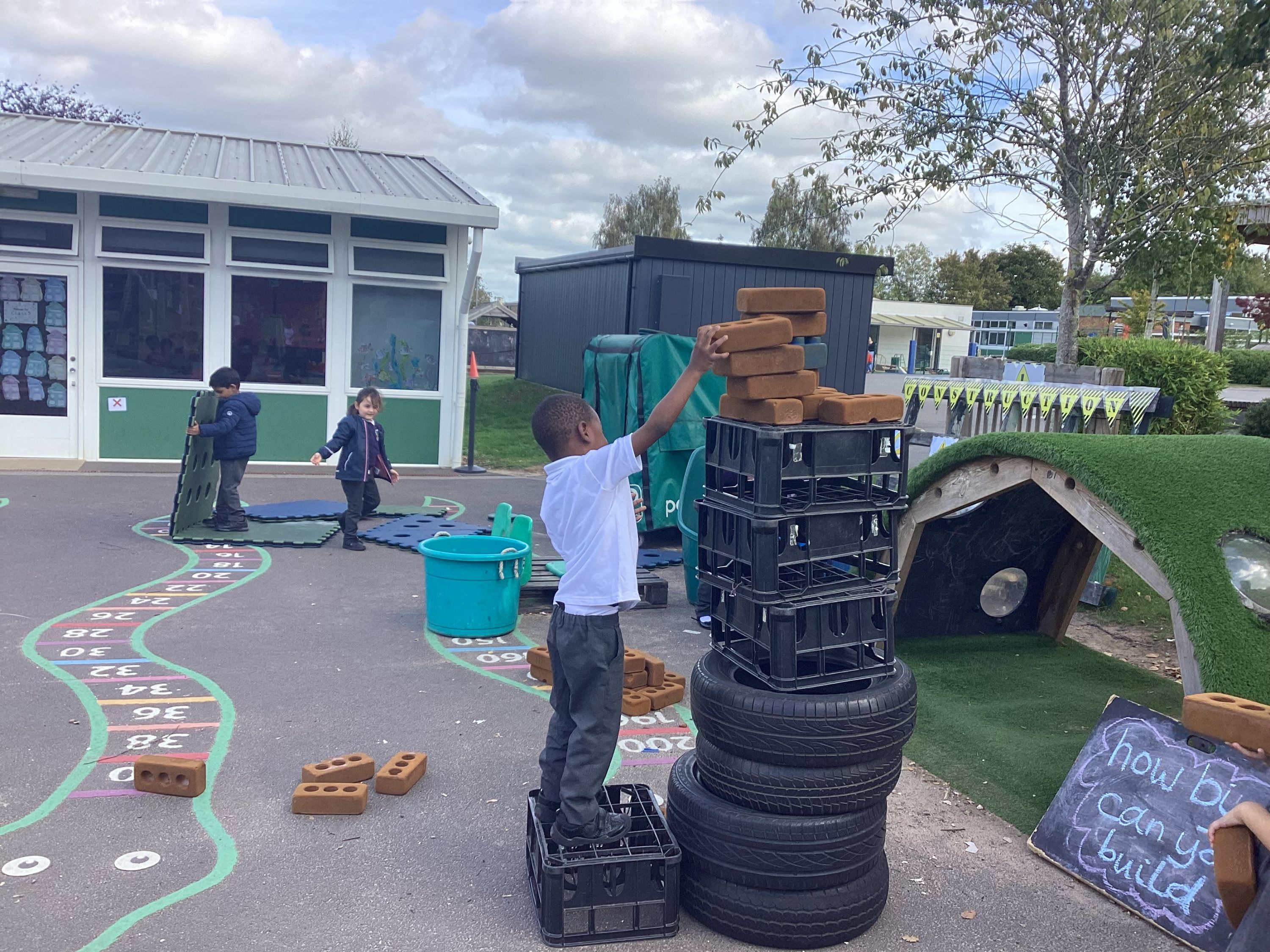
Outside, the children continued working on repeating bean patterns and began creating their own. They used large construction materials to build giant castles and designed obstacle courses, promoting physical development, problem-solving, and imaginative play. They also worked cooperatively to build a bug hotel, collecting natural resources from forest school.


Update - Friday 24th April 2026
This week we have continued our learning around the story of the The Gingerbread Man.
In our topic time, the children have been learning about kitchens. They talked about the appliances they have at home and enjoyed sorting objects into things you would and wouldn’t find in a kitchen. We also explored the idea of past and present, looking at a timeline and discussing when the Gingerbread Man story was first written. The children were fascinated by pictures of kitchens from the past and loved spotting similarities and differences with kitchens today.
In maths, we have been focusing on teen numbers. The children explored how numbers above ten are made, learning that they are made up of one ten and some ones (e.g. 14 is one ten and four ones). We also played a fun counting game where we stood in a circle and counted to 13—whoever said 13 had to sit down! The children really enjoyed this, and it would be a lovely game to try at home (you could even upload a video to Tapestry).
On Wednesday, we celebrated Earth Day. We talked about how to look after our planet and shared some brilliant ideas such as turning off lights and recycling. The children practised sorting materials (paper, plastic, fabric) and created drawings showing how they can help care for the Earth.
We also baked our own gingerbread men! The children helped mix, roll, and cut out the dough. We talked about what we could see and smell as the ingredients changed—there were some fantastic observations like “it’s getting softer” and “it’s changing colour.”
Outside, the children have been very busy building bridges to help the Gingerbread Man cross the river. They also enjoyed games involving collecting and counting points, and worked together to build large gingerbread houses using boxes, foam bricks, and construction materials.
It has been a fun and busy week full of hands-on learning!


Update – Friday 17th April 2026
This half-term, our topic is Traditional Tales, and this week we have been enjoying the story of The Gingerbread Man.
The children loved retelling the story using props and puppets in the tuff tray. They also designed and made their own puppets and created a puppet theatre, where they performed shows for their friends. We explored the structure of the story by discussing the beginning, middle and end, and even had fun changing the ending—sometimes the Gingerbread Man was eaten by the fox, and other times he managed to escape!
The children also took part in role plays, acting as different characters and putting on their own performances for an audience.
In literacy, we used colourful semantics to build sentences. The children chose from pictures of the Gingerbread Man, different verbs and a setting to create sentences such as “The Gingerbread Man ran down the road” or “The Gingerbread Man hopped down the road.” They enjoyed reading their sentences aloud, spotting silly ones, and choosing a favourite to stick in their books ready for writing next week.
In phonics, we have begun Phase 4. This phase focuses on blending and segmenting longer words, particularly those with adjacent consonants (such as tent, wind, lamp), rather than introducing new sounds. We have also been learning new tricky words: said, so, have, like.
In maths, we have been revisiting 3D shapes, exploring their properties and identifying the 2D shapes within them. We have also been practising patterns, including AAB, AABB and ABB patterns, and learning to spot and correct mistakes.
Outdoors, we continued our Gingerbread Man theme alongside our rhyme of the week, 10 Current Buns. The children used the large construction equipment to build bridges and boats to help the Gingerbread Man cross the river—showing great teamwork and creativity!


Update – Friday 20th March 2026
This week in Topic Time, the children have learnt about the changing seasons and observed the first signs of Spring. We discussed buds appearing on the trees, flowers blooming, days getting longer and young animals, such as lambs, being born. We have also focused on a life cycle of a bee and on what the plants need to grow. It informed our writing learning jobs, and children had a go at writing sentences such as: The blossom is pink. or I can see he buds.
Everybody had a chance to plant cress seeds and we have been very excited to watch it grow. The children also had a go at writing instructions based on our planting job.
In Phonics, we have been reading some longer words with two or three digraphs, for example shimmer, singer or shower, as well as words ending in -ing, for example singing, chatting, winking or waiting. We have also learnt some new compound words, such as rooftop, carpark or farmyard.
Our focus in Maths was number bonds to 10. We have also looked at doubles up to 10 and learnt a rhyme to help us recall them:
- Double 1 is 2 tap it on your shoe.
- Double 2 is 4 stomp it on the floor.
- Double 3 is 6 do some finger clicks.
- Double 4 is 8 put your arms out straight.
- Double 5 is 10 let's do it all again.
The children made their own recycled modelled bumblebees and booklets about spring. We finger painted blossom petals and also made a lamb using cotton wool.
Linking to our 'People who help us' topic, we had a visit from an AA patrol person who explained how he would help us at the side of the road if we were broken down in a car. We role-played what to do to keep safe. He also showed us some of the equipment he has as well as attaching a car to the back of the van to tow it.
The week ended with our mufti day for Red Nose Day, where we talked about the charity and why it is important to raise money for those in need.


Update – Friday 13th March 2026
This week, we were surprised when an egg mysteriously appeared in our classroom! The children were very curious and wondered what could be inside. The next day, we discovered that the egg had cracked and there were footprints leading out of the classroom. We talked together about what we thought the footprints might belong to.
We soon realised that a dinosaur had hatched from the egg! We learnt some new vocabulary linked to dinosaurs and discovered the meanings of the words carnivore, herbivore, extinct, fossil and palaeontologist.
We read the book That’s Not My Dinosaur and then created our own pages for the story. The children chose a picture and used the sentence starter “That’s not my dinosaur…”. They then finished the sentence with their own ideas, such as “its neck is too long”, “its teeth are too sharp”, or “its legs are too short”.
We also looked at the Axel Scheffler book Flip Flap Dinosaurs. The children created their own silly dinosaur pictures and wrote about them.
In our daily maths sessions, we have been recapping one more and one less with numbers to 10. We used ten frames to show one more than a given number and played a fun game of “One More Bingo” with our friends.
In phonics, we have continued focusing on Phase 3 digraphs and trigraphs. The children have been reading and writing words with two or more digraphs, such as sharp, cheep, shimmer and chatter. We have also been revisiting the tricky words we have learnt so far this year.
Our nursery rhyme this week has been Wind the Bobbin Up. The children have really enjoyed singing it and practising the actions, winding on both a small and very large scale.
We have also become palaeontologists during a dinosaur dig, using tools such as brushes and shovels to carefully uncover fossils. In maths, we practised identifying one less using plastic bottles and beanbags while singing the song Ten Green Bottles as we played.


Update - Friday 6th March 2026
This week we have continued our topic of People Who Help Us, focusing on the significant historical figure Florence Nightingale. We learned about when and where she was born, and how her parents did not want her to become a nurse. The children were interested to discover that at that time most women did not go out to work.
We found out why Florence was known as “The Lady of the Lamp” and looked at a replica of the lamp she used. We discussed why she needed a lamp (there was no electricity) and why she is remembered as an important person in history. We also learned about germs and how they can make people ill. The children understood that Florence taught others how important it was to keep bandages, beds, clothes and hands clean so that patients could recover.
Using pictures of Florence to inspire our writing, the children wrote simple sentences such as “She will need soap.” and “She will need a lamp.” They also enjoyed writing speech bubbles for Florence and the soldiers she cared for.
In our outdoor learning, the children have been putting out tissue paper “fires,” playing tricky word target games, and pretending to be postal workers. In their role play, they read words on envelopes and posted them into the correct slots. The children also took part in running races and used stem sentences to explain who was faster, slower, fastest and slowest.
The children also learnt about other significant people in history, such as Nelson Mandela, Marie Curie, Amelia Earhart, Louis Braille and Rosa Parks. The children learnt why these people were significant and what they did to inspire others. They then chose their favourite significant person and explained why they liked them through discussion and conversation, e.g. "Marie Curie is my favourite because she made medicine to make people better.", "She might have made the medicine to make me better, "and me, I had to take medicine for my poor ear."
In phonics, we have been recapping the ‘er’ digraph and ‘air’ trigraph, alongside reviewing words with double letter digraphs and longer words.
In maths, we have been exploring the numbers 9 and 10. The children have been finding different ways to make these numbers using dominoes, sorting representations of 9 and 10, and using part-whole models to understand number composition.
We also enjoyed celebrating World Book Day, where the children looked fantastic in their costumes and took part in a range of exciting reading activities throughout the day.


Update - Friday 27th February 2026
This week, we began our new topic, People Who Help Us.
On Monday, we looked at photographs of adults around our school who help us and discussed how they support us. For example, Mrs Suano helps us when we are hurt or feeling unwell, our coaches help us to learn in PE, and our teachers help us to learn new things every day.
We learned about firefighters and the important job they do. We explored the equipment they use, such as ladders and helmets. In our adult-led writing, the children wrote sentences including “He has a ladder” and “He has a helmet.”
We also explored how police officers have changed over time by looking at pictures from the past and present. We compared similarities and differences in their uniforms. Using pictures and word cards, the children built and wrote sentences such as, “She has trousers,” “She has a skirt,” and “She has a high-vis vest.”
Later in the week, we learned about dentists and why it is important to look after our teeth. We discussed how and when we brush our teeth and shared our own experiences of visiting the dentist.
In phonics, we reviewed Phase 3 digraphs and trigraphs, including: ai, ee, igh, oa, oo, ar, or, ur, ow, ear, and we also recapped some tricky words.
In maths, we have been exploring length, height and time. We used one-minute timers to see how many actions we could complete in that time — such as how many jumps we could do, how many beads we could thread, or how many cubes tall we could build a tower. We then challenged ourselves to beat our previous scores! We also compared heights, using language such as, “The ___ is taller than the ___,” and “I am shorter than ___.”
Our role play area has been transformed into a vet’s surgery. The children have loved caring for the animals, administering medicine and bandaging injuries.
Outside, the children became detectives! They measured footprints and worked out which “criminal” they belonged to. They also rescued cuddly animals by crawling and climbing through hoops with tissue-paper “fire” to bring them to safety.
It has been a very busy and exciting week of learning!


Update - Friday 13th February 2026
This week, we have been reading the book 'Keith the Cat with the Silly Hat'. We used the story to help us build sentences using colourful semantics, we had the beginning and end of each sentence and had to change the verb e.g. Keith licks his nose, Keith picks his nose, Keith cooks his nose, Keith fights his nose. Then we had to decide which sentences were sensible ones and which were silly ones.
We sequenced the story together and used partner talk to share what we could see happening in the pictures.
We also explored magnets and magnetism, linking this to our focus story as well. Keith has a new magnetic hat and wanted a badge to go on it. We explored which materials were magnetic and which weren't.
In maths, we have been exploring length and height, using the terms' long, longest, longer' , 'short, shortest, shorter' and 'tall, tallest, taller'.
In phonics, we have been assessing what we have learnt this half term and practising any digraphs and trigraphs that we have found particularly tricky.
On the art table, we have made hats for Keith, collage pictures of Keith and mixed colours to make orange.
Have a wonderful half term holiday, we look forward to seeing all your holiday fun on Tapestry.
.jpg?v=1784074399)
.jpg?v=1784074399)


Update - Friday 6th February 2026
This week we have been reading the book 'Barry the Fish with Fingers', another story written by Sue Hendra and Paul Linnet. We looked at the features of the book, identifying the front and back cover, the title, cover picture and the blurb.
We used Colourful Semantics to help us build a sentence that we could then write. We also used Colourful Semantics in a different way; we used it to build sentences which we had to read and decide if it was a silly sentence or one that happened in the story
We wrote speech bubbles for some of the characters from the story, e.g. I am a puffer fish. We also sequenced the story and wrote an 'I can see' sentence. We have been doing lots of practice writing 'I can see' sentences. It would be great if you could practise writing some of these at home as well.
In maths, we have been learning about doubles and about odd and even numbers. We have been using Numicon to help us explore these ideas.
The children learnt that a number is even if it can be split into equal pairs. Numicon helps them to clearly see this by showing what pairs look like, as well as what happens when there is a single leftover unit, which tells us a number is odd.
In phonics, we have been learning to read longer words and recapping the digraphs and trigraphs that we have already learnt. We have been reading words such as chicken, pocket, rocket and carpet and compound words such as: carpark, bedroom and farmyard.
On the art table, we have been mixing red and yellow to make orange, then using this to print hands to create Barry the fish with fingers. We have also painted with forks to make the puffy fish puffy and created a class collage, which we then printed on.


Update – Thursday 29th January 2026
This week, our focus book has been Norman the snail with the silly shell. We have read the book lots of times, and everyone thoroughly enjoyed it. We used Colourful Semantics to build sentences about what we could see in pictures from the story. We then wrote the sentence to match the pictures. We also sequenced the story and made sure we used the words first, next, then and finally/last when retelling from our pictures. We learnt facts about snails and slugs, and what their similarities and differences are.
For our adult-led writing task this week, we gave Norman some silly shells and wrote a sentence to describe what we could see, e.g. He has a book shell, He has a boat shell.
In maths, we have been exploring the numbers 6, 7 and 8. We have matched pictures showing these numbers in different ways, e.g. six on a dice, 7 fingers being held up, 8 shown on a domino. We have also shown these numbers on a tens frame and number line. We have ordered numbers up to 8, and had to explain what number was missing when a friend removed a number without us looking. We also had to say how we knew which number was missing, e.g., I knew 5 was missing because 4 is one less and 6 is one more.
In phonics, we have learnt the digraphs air and er, and the tricky words are pure and sure. We have also been reading words that contain double-letter digraphs, for example, carrot, digger, letter, and rubber.
We have created lots of snails in different media. We used our fingers to dot spiral shells, curled paper strips around a pencil to create 3-D shells and collaged.
Have an amazing weekend, and don't forget to post all your adventures on Tapestry.


Update - Friday 23rd January 2026
This week, our Sue Hendra and Paul Linnet story has been No-bot, the robot with no bottom. We have continued to use colourful semantics to help us build sentences, which has been really helpful for our oracy practice. We then used the sentences we had built and wrote them. We wrote labels and captions to describe pictures from the story, e.g. it was a hat, it was a boat. The children sequenced the story, and we created speech bubbles for Gary the elephant and the rabbits.
We also explored real-life robots, looking at pictures of robots from the past, present, and future, and learnt about the important jobs some robots do.
On the art table, we have made a collaborative robot, made shape robots and explored folding paper in different ways to create different textures.
In maths, we have been exploring weight using scales, objects, and cubes. We identified which objects were heavier and/or lighter, and then explained what we knew. We worked with a partner to estimate the mass of objects in cubes. We all explored capacity, learning about full, half full and empty. We then explored this using water beads from different-sized containers.
In phonics, we have learnt the digraphs ur, ow, oi and ear. We have also learnt the tricky words my, by and all.
We have been reading in our small reading groups and practising our handwriting this week. The letters we practised this week were m, n, r and b.


Update - Friday 16th January 2026
This week our focus book has been Wanda and the Alien. We built sentences using words and pictures, making sure we orally rehearsed before building practically. We sequenced the story and looked at how the characters might be feeling. The animals in the story were afraid of the alien because he looked, so we discussed if we should be afraid of people that are different to us. We also wrote speech bubbles for some of the characters in the book.
In the art area the children made shape rockets to match the one in the story, they mixed yellow and blue to make green and created toilet roll tube aliens.
In phonics we have learnt the digraphs oo, ar, or and ur. We also learnt the tricky words was, you and they.
We have continued to read in our small groups three times a week and practised our handwriting. Our letter focus this week was l, i, t, j, u, y. One afternoon a week we are going to use a year one class to practise our handwriting, this is a brilliant opportunity to start transition discussions and get the children comfortable with the classrooms. We will only be in the classroom for around 10 minutes a week.
In maths we recapped number bonds to five using double sided counters, we also recapped one more and one less to five. We also explored composition, looking at pictures showing different amounts of peas in their pods.
Update - Friday 9th January 2026
Welcome back, we hope you all had a wonderful Christmas.
This week we have started our Sue Hendra topic, and over the next 6 weeks we will be using her books to inform our learning. This week, our focus book is Supertato. We have been using the book to help us practise our writing and reading. We have also had Supertato-themed maths and art activities.
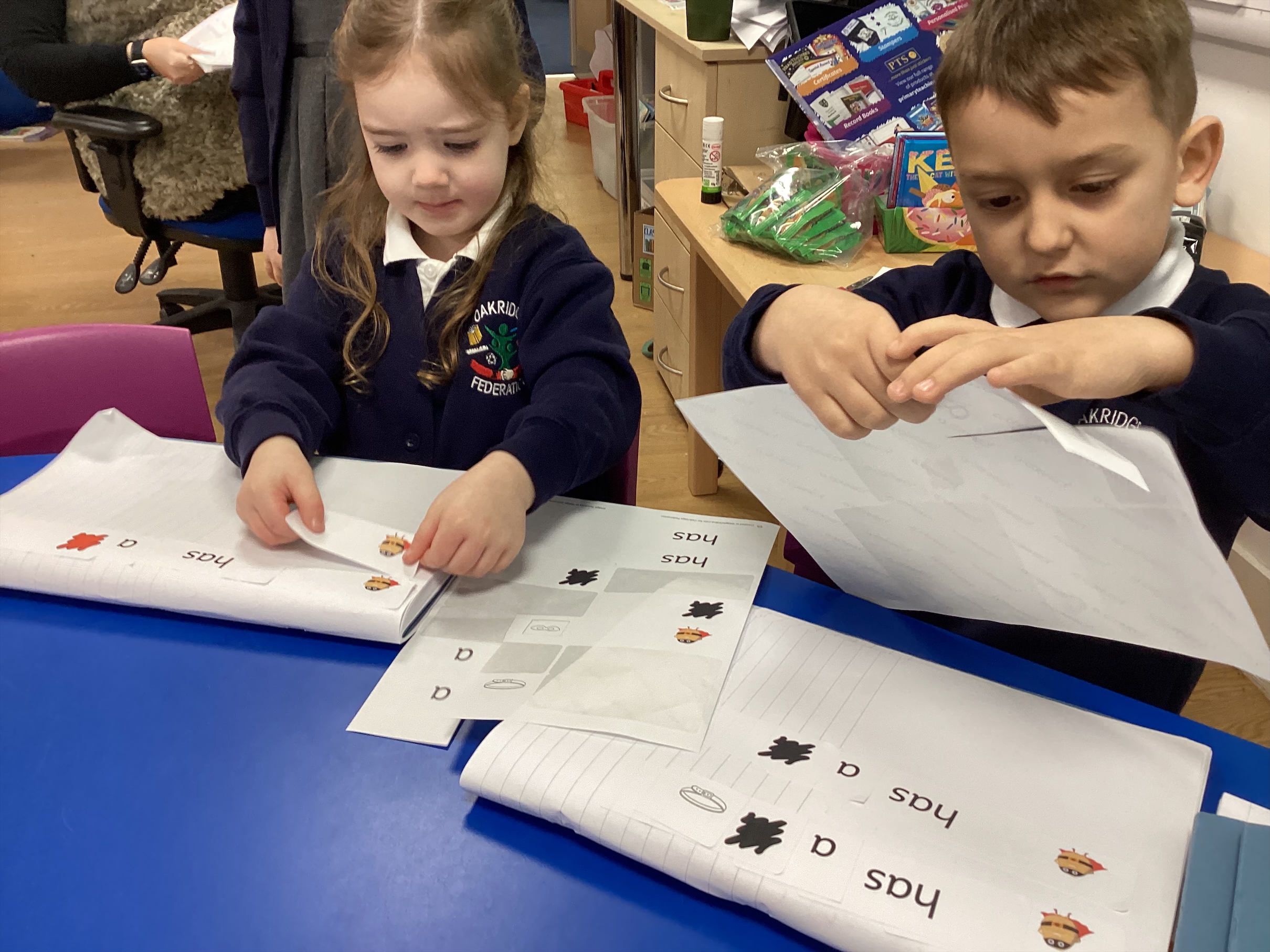
We built sentences using stickers with pictures and words on, these described what Supertato was wearing. For example, each sentence started with a picture of Supertato, then the word 'has' and the word 'a, they then had to choose an item of clothing and the colour that it was.
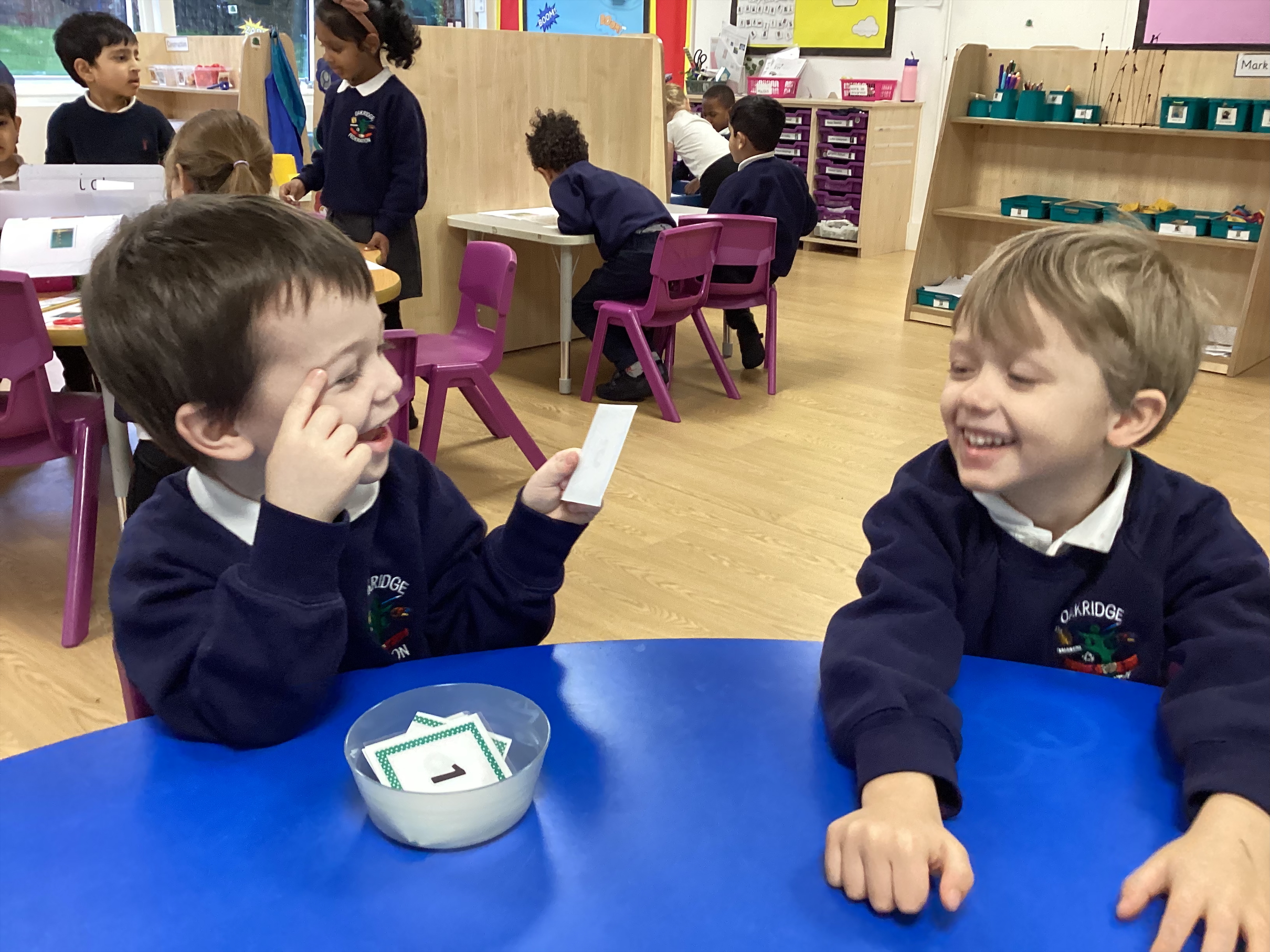
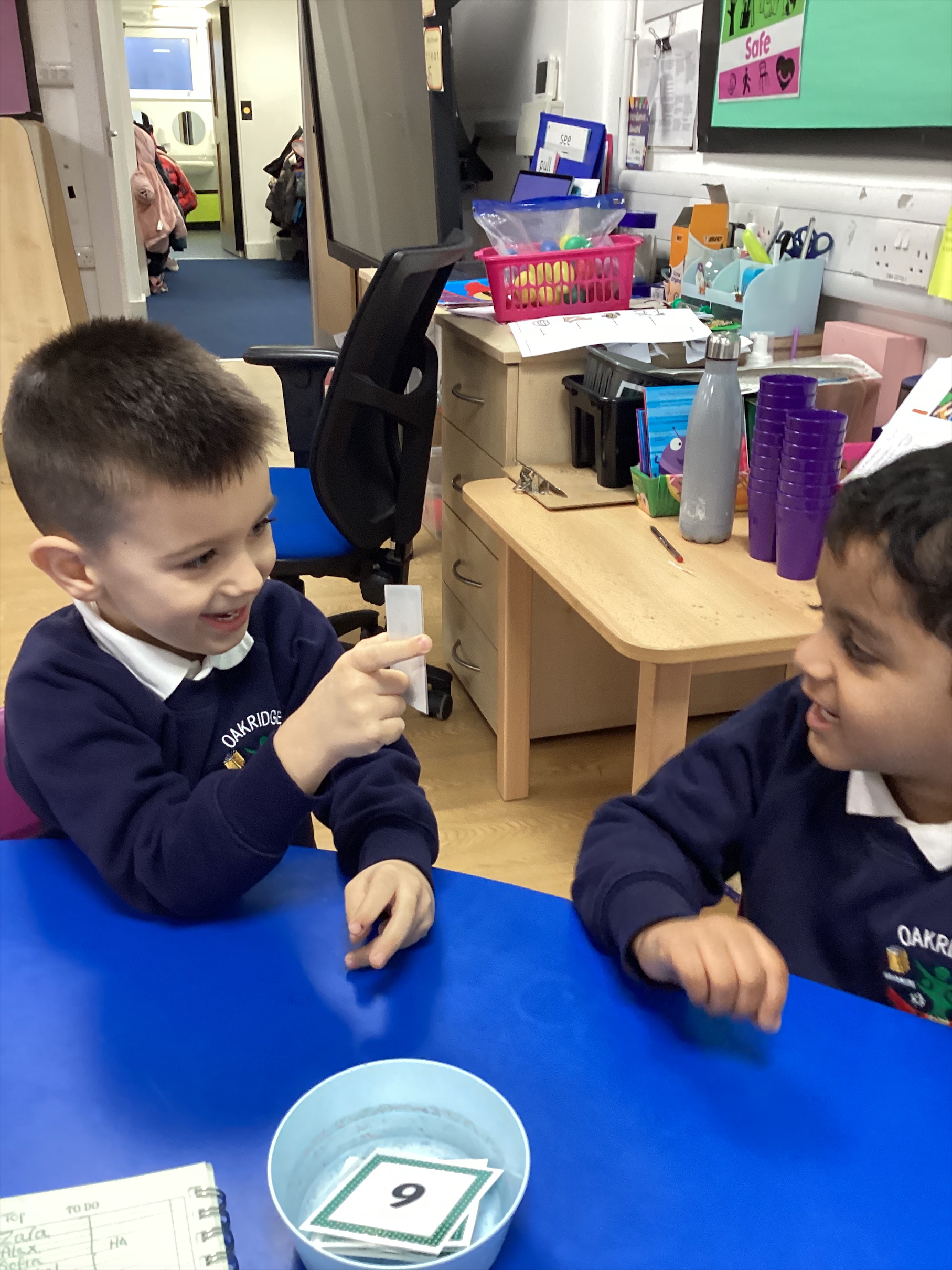
On the maths table, the children had to find one less by completing evil pea challenges, capturing him in jelly like Supertato. We also played a subitising pairs game, children had to turn over two cards and if they showed the same amount but in a different way, they won the cards, e.g. two apples and a hand showing two fingers is a winning hand.
The children loved turning themselves into tricky word games; they wrote tricky words on labels, stuck them to themselves and then played a game with their friends. I played as well, I read one of their words, and they had to read one of mine. We changed the game slightly so that they could win the word if they read it correctly.
In phonics this week, we have learnt three new digraphs and one trigraph. We learnt ai, ee, igh, oa.
We changed our role play into a Superhero headquarters, many of the children loved making their own capes and masks and becoming class superheroes.
Update - Friday 19th December 2025
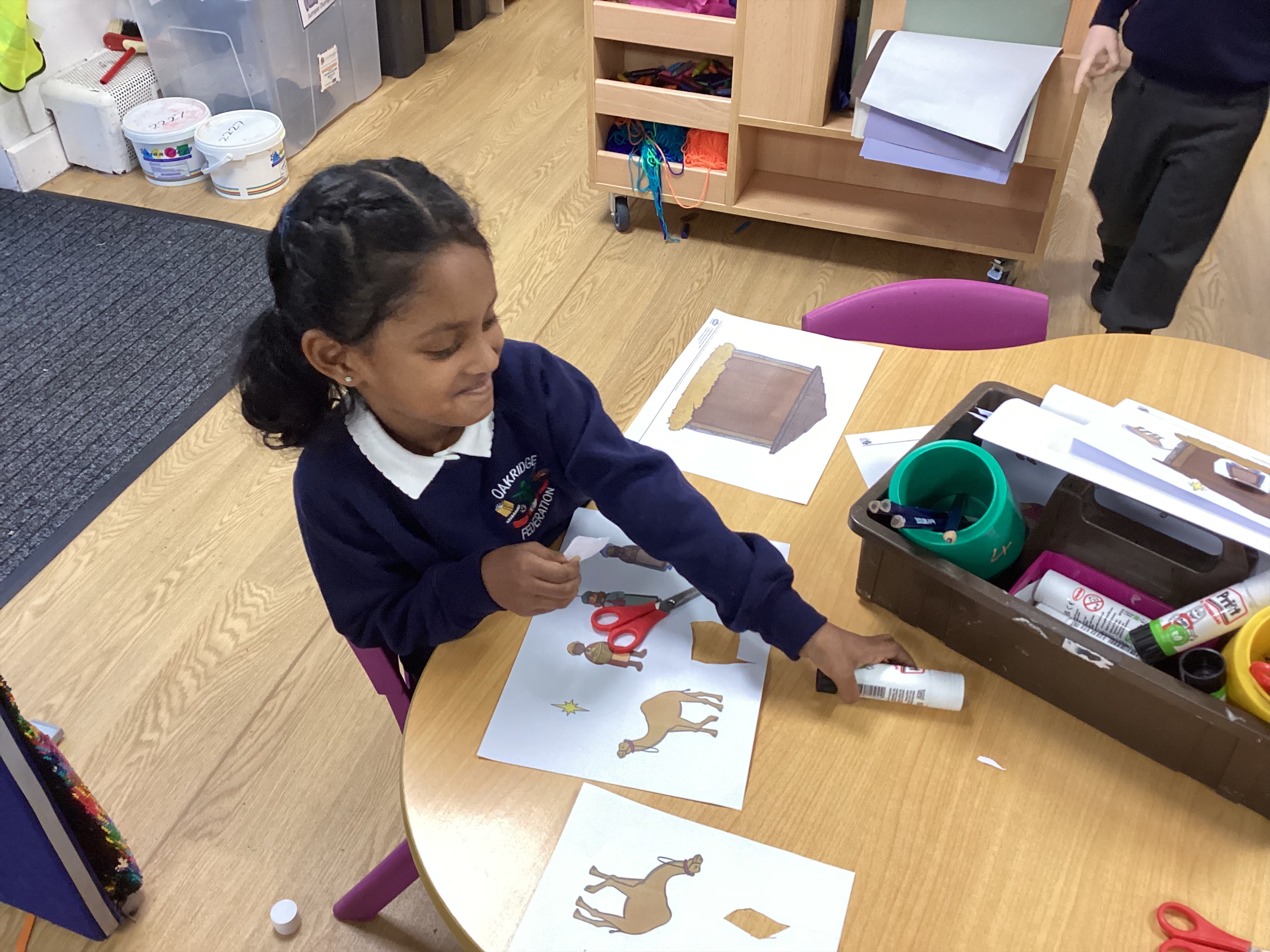
This week, we have been learning about the Nativity story. We discussed why Mary and Joseph had to travel to Bethlehem, who visited them in the stable and why they had to hide Jesus from King Herod. The children all decided that he wasn’t a very nice man.
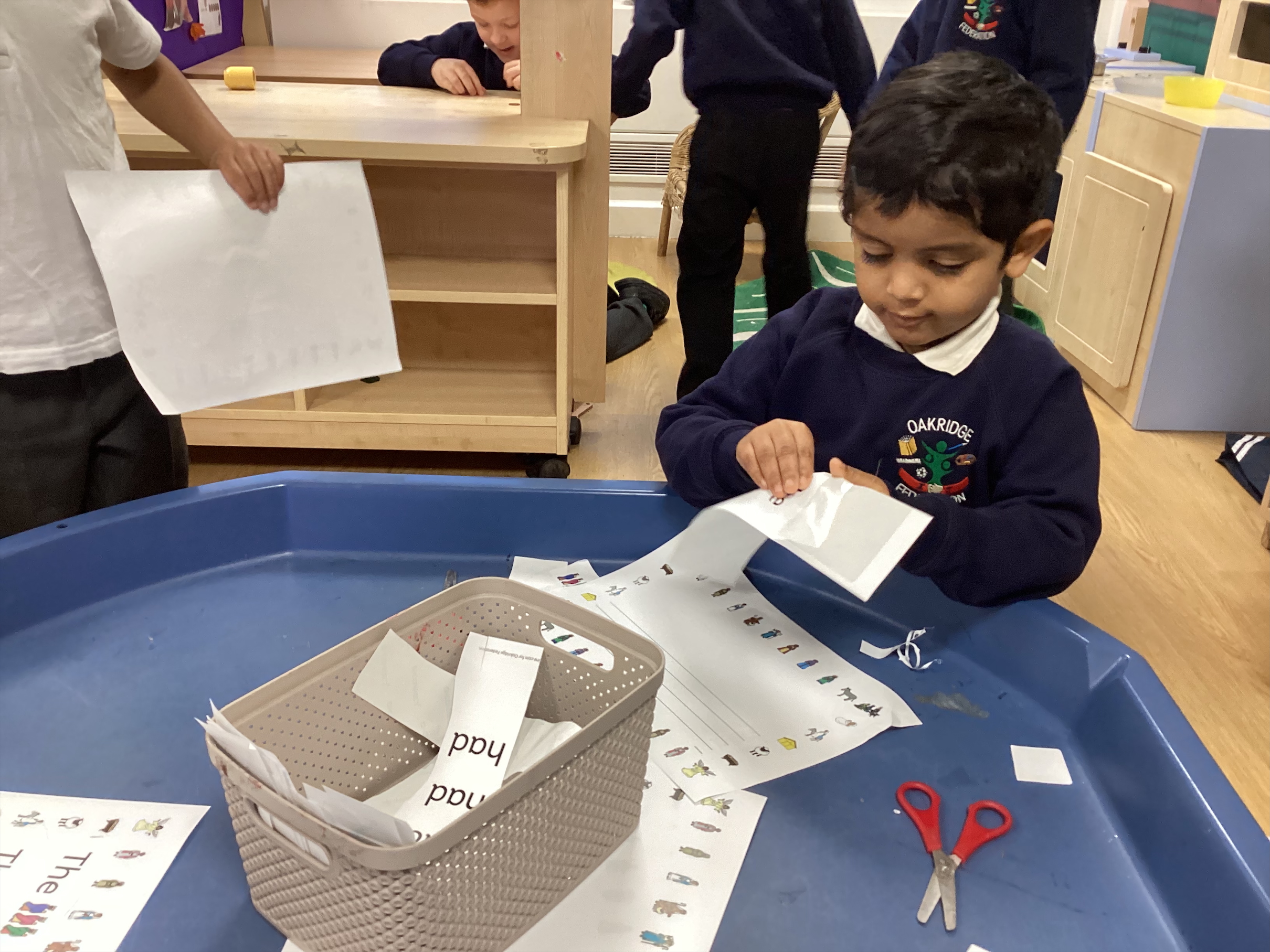
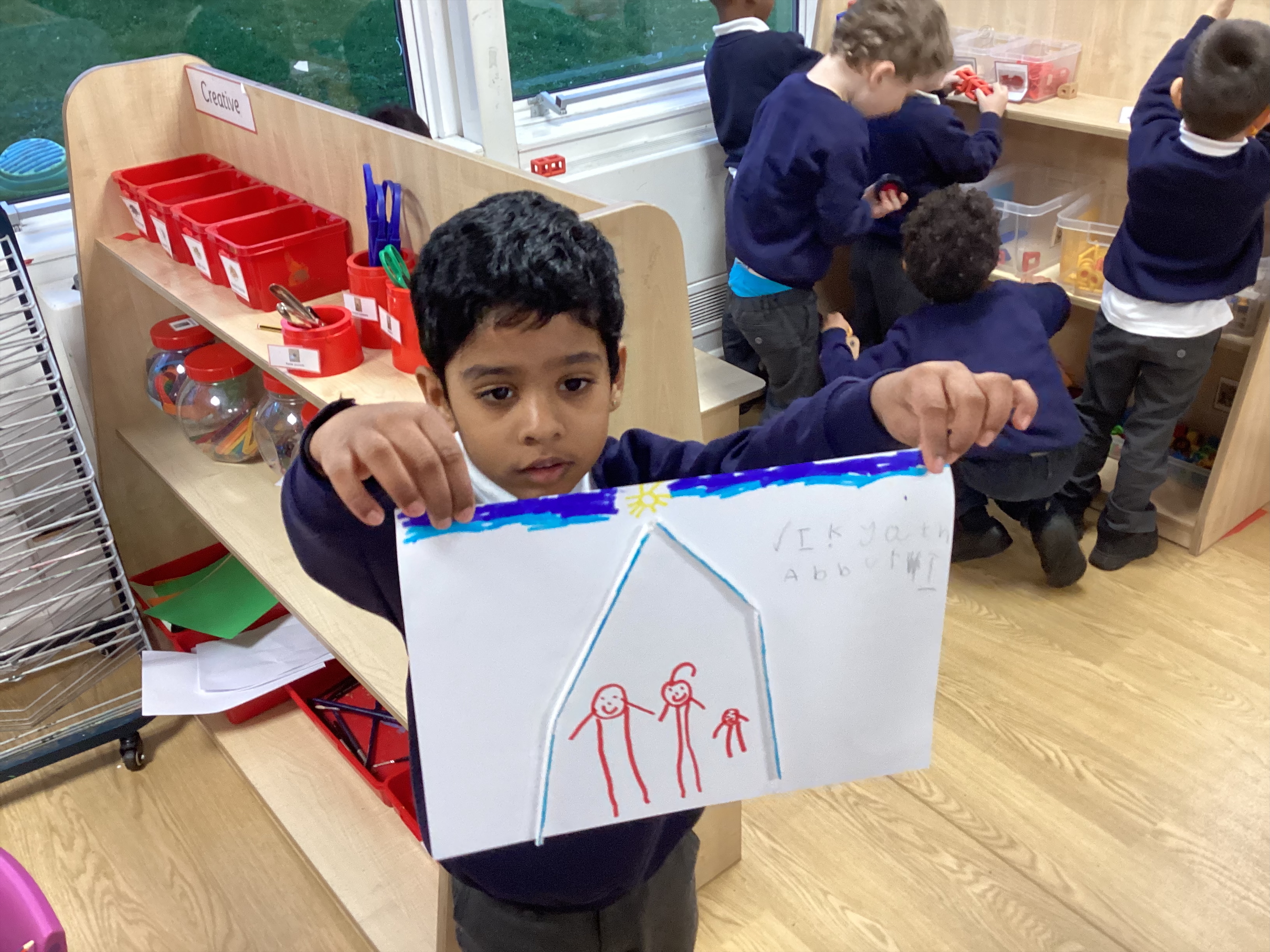
We have created our own nativity scenes, labelling them and talking about the different characters. We built sentences using pictures and words about the shepherds, wisemen, and Mary and Joseph, the children then read them back. We also created stable scenes using lolly pop sticks and drawing the main characters.
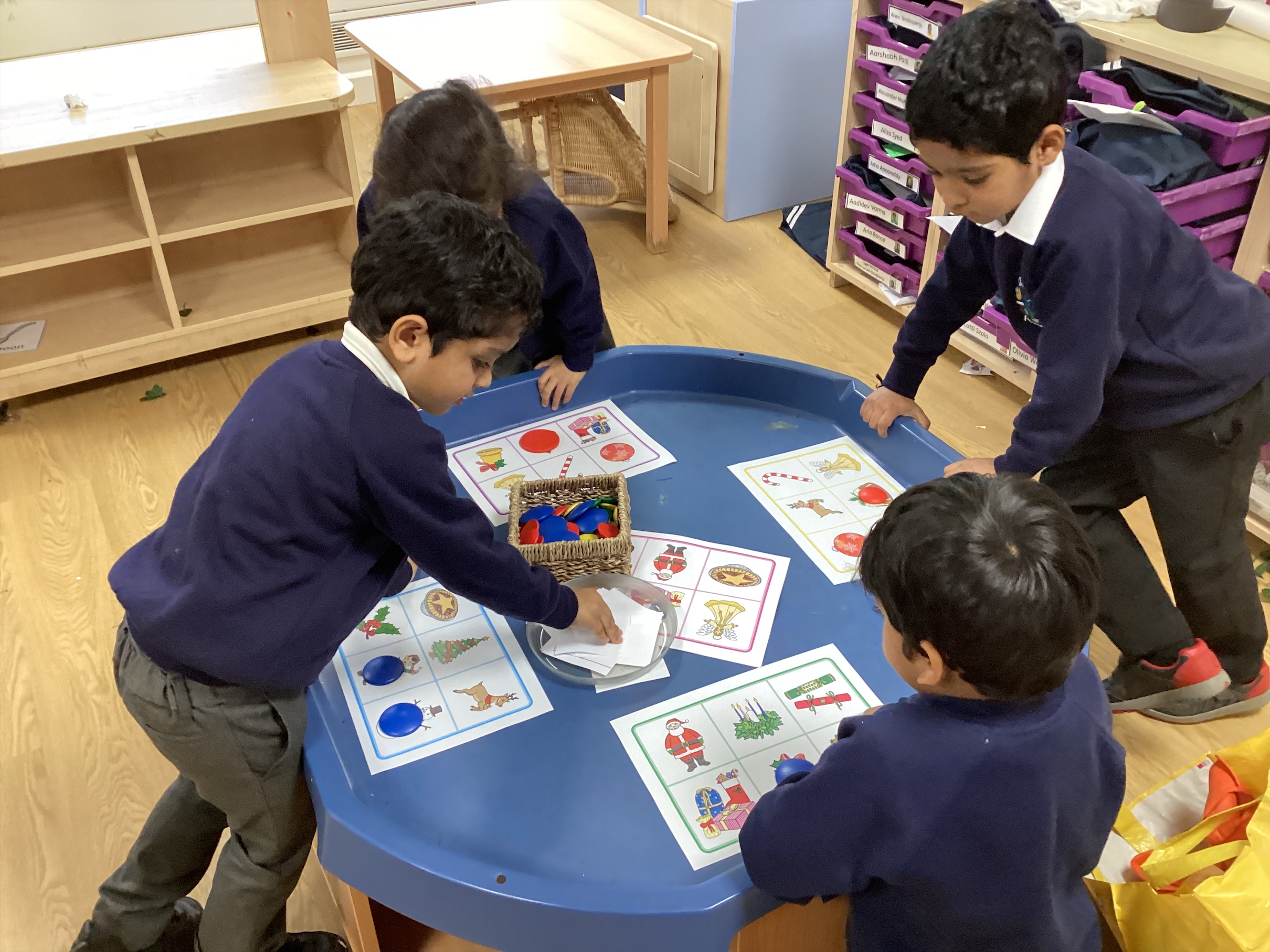
We have played lots of Christmas learning games, such as Christmas bingo and Christmas eye spy. We have also created snowmen, paper chains and Christmas trees to help decorate the classroom.
We enjoyed our Christmas lunch, which we ate while wearing our Christmas Crowns.
Thank you so much for your support during our nativity performance. The children were very excited to see all of you there and were so proud of themselves. We are all proud of them as well; every child was amazing.
We wish you all a very merry Christmas and a happy New Year.
Update – Friday 12th December 2025
This week we have started our Christmas celebrations. In Topic Time, we introduced the children to timelines, and they learnt what the words past and present mean. They also learnt about Christmas lights, and found out that before electricity was invented, they used to have lit candles on trees. The children did a sorting activity; they had to sort objects that used electricity and those that didn’t use electricity.
In phonics, we have been assessing already taught phonemes, decodable and tricky words. We have also been recapping tricky words and digraphs that the children have recently learnt.
On the cutting table, we cut strips of green paper, organised them by colour, and stuck them down to create Christmas trees.
On the writing table, we have been writing captions for Christmas pictures, such as his big sack, his hot mug, his bells, and his red hat.
We have continued to practice the nativity play and look forward to our dress rehearsal in front of the Nursery and Year 1 next Monday. If you still haven’t brought in your child’s costume please do this as soon as possible, thank you.
In the tuff tray, we have been using numicon to find different ways to make five. We gave this a Christmassy twist by drawing around the five numicon and turning them into elves. Then we laid two pieces of numicon into the empty space, e.g. two and three, to show ways of making five.
We have been reading lots of Christmas-themed books and have loved seeing and sharing your Christmas-related activities on Tapestry.
Update - Friday 5th December 2025
This week, we have been reading Stickman and using it to inform our learning. We have learnt what a speech bubble is and had a go at writing one, writing the caption 'I am stickman, I am not a stick'. We have done lots of tricky word practice and have played lots of games to help us remember them.
On the art table, we made our own split pin Stickman and drew our favourite scene from the book.
In phonics, we have been reviewing plurals and specific phonemes we have learnt this half term. We have been completing lots of writing tasks during our classroom activities. We have also been practising our handwriting, this week we have focused on the letters c and a, making sure that we use the formation phrases and that we are ready for handwriting. Before handwriting, we make sure we are sitting up straight with our feet flat on the floor. We then use the phrase 'pinch, pinch, pinch, flick' to help us pick up our pencil correctly. If you would like to practise the letters at home, please use the phrases-: c - curl around the cat, a - around the astronaut and down to space. Please make sure they are forming the letters in an anti-clockwise direction.
We have been spending time practising our nativity, singing songs and practising our lines. All of the children have been practising extremely hard and have been making us all very proud. We can't wait for you all to see their amazing performance.


Update - Friday 28th November 2025
This week, we have been reading Monkey Puzzle. We have used the story to inform lots of our continuous provision activities. We have had a small world scene where the children could act out the story, taking on different roles and using their oracy skills to retell the story.
In art we enjoyed creating our own parrots from the story. We used feathers as paint brushes and printing tools to create our parrots. We also used our colour mixing knowledge, mixing green to paint frogs.
In maths, we explored one more and one less with numbers up to 5. We also used part-whole models and numicon to explore bonds to 5. We practised our stem sentences to explain what we knew, e.g. 2 is a part, 3 is a part, 5 is the whole.
In phonics, we have learnt the digraphs sh, th, ng, nk, and the tricky words, she, push, he, and of.
We also had an amazing stay and play focused on handwriting. Thank you to all those who came.
Please don’t forget to keep reading and logging this in reading diaries.
Update – Friday 21st November 2025
This week, our Topic Time and writing were informed by A Squash and a Squeeze by Julia Donaldson. We looked at the front cover and discussed the title, author, illustrator and other information we could find on there. The children sequenced the story and drew and labelled their own story maps as part of enhanced provision activities.
They also wrote captions or words such as: the jug, a jug and a rug, the man or fat hen.
In Phonics, we have learnt about plurals and chunking up to read words such as naps or hugs. We have also introduced a new grapheme/phoneme z and new digraphs ch and qu. Some words we can read and write now include: zip, buzz, quick, quack, chip or rich.
Our tricky words this week were go, no, to and into. Please continue practising recalling tricky words at home.
In Maths, we looked at composition, finding, recognising and subitising numbers 4 and 5. Some of the stem sentences the children used to describe their reasoning were: ‘I know that two is a part and three is a part. I know that 5 is a whole.’ or ‘I know that there are 4/5 dots on the dice. I know it because I can subitise.
Update - Friday 14th November 2025
We had another busy week in Year R. On Tuesday, we celebrated Remembrance Day. We had a special assembly during which we observed a two-minute silence to show our respect to the brave soldiers who protect our country. The children helped to decorate the classroom by making individual poppies, and they also worked together to collage a whole class poppy, which we displayed in the window. On Friday, we celebrated and talked about Children in Need. We have learnt what charities are and how we can support them. Everyone enjoyed lots of special Pudsey-themed learning jobs.
Our book of the week was The Gruffalo. Together we sequenced the story and made story maps to indicate what happened first, next and last. The children had fun retelling the story using the puppets and scenes they made. We wrote words and captions, such as ‘the big nut’, ‘run’ or ‘the log’, to label and describe a picture from the Gruffalo book.
In Phonics, the children learnt 4 new GPCs (graphemes-phoneme correspondence): v, w, y and x, as well as 4 new tricky words: and, his, has and her. Now we can write and read words such as: fox, van, yes, box, win, yap or wax. We have also practised reading phrases, for example: ‘a sad cat on the bed’ or a ‘fat hen on a hill’.
The children read in their reading groups and then had a go at practising their fine motor skills during structured handwriting sessions. Please remember to log on to eCollins to access the books assigned to your child’s account.
In Maths, we talked about circles and triangles. We have learnt stem sentences, such as: ‘A triangle has 3 sides. Triangles have 3 corners.’ or ‘I know it is a circle, because it has one round side’. The children used positional language to describe the position of objects. We practised on, between, under, in, behind and next to.
Update - Friday 24th October 2025
We have started this week by talking about Diwali and exploring the story of Diwali, as well as different ways that it is being celebrated. The children had a go at making their own Diva lamps from paper plates decorated with sequins and glitter, and at creating Rangoli and Mehndi patterns.
Our story of the week was Funny Bones. It informed our writing, which meant that the children had a go at writing labels such as dog/ the dog, dad / big dad, bed I the bed, hat /red hat. We have also talked about body parts and the fact that we all have bones under our skin. We looked at some X-ray photos and tried to point to the same part on their own body.
In phonics, we reviewed and consolidated all of the phonemes and graphemes we have learnt this term. The children were busy finding and writing tricky words, building CVC words and reading and matching words to the corresponding pictures.
In maths, we closely looked at the composition of numbers 1, 2, and 3. We explored subitising to 3, meaning the children were able to identify an amount without counting. We have also explored what one more and one less than a given number was.
Update - Friday 17th October 2025
This week, the children learnt the phonemes f, h, b and l. The tricky word this week was the. The children had a go at reading words like red, hat, lip and fin. Everyone completed activities to consolidate what they had learnt. This included matching, cutting and sorting.
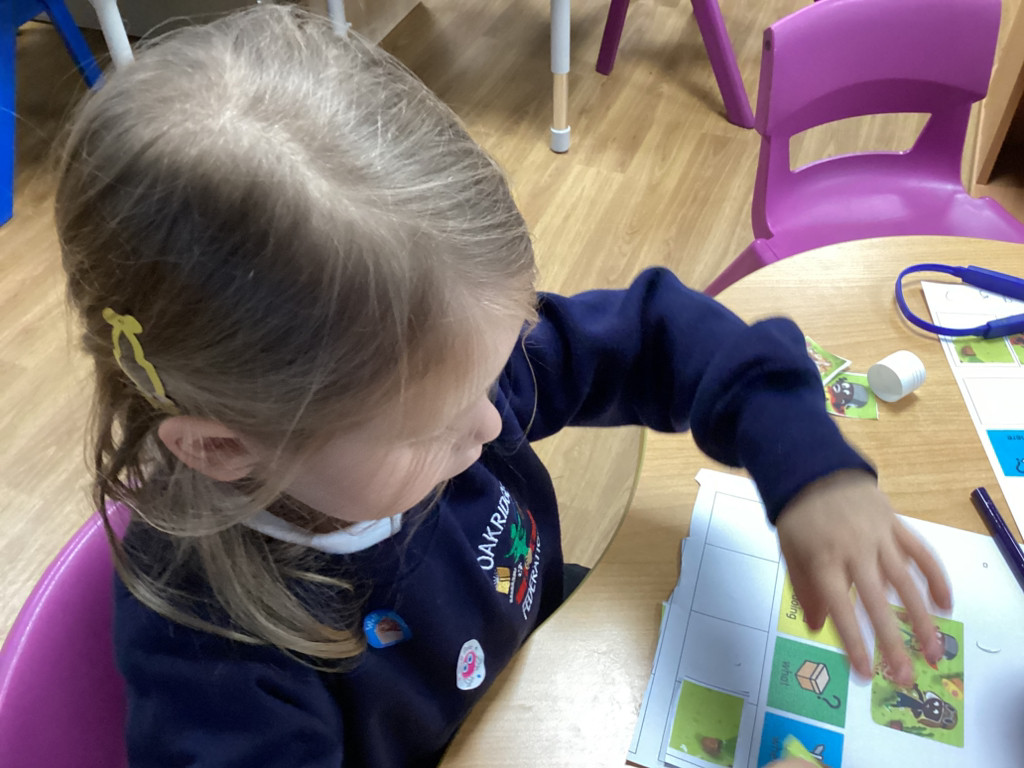
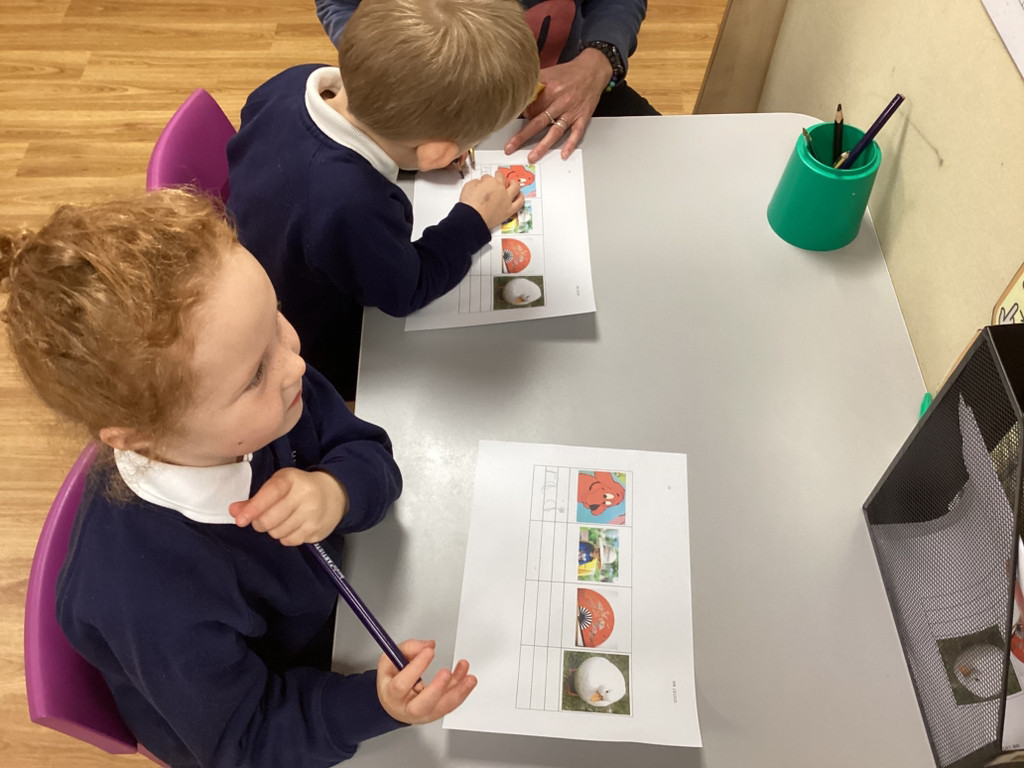
Our Topic Time book was called "We Are Going to Find the Monster." The children had a go at forming sentences orally and practised writing CVC words connected to the book.
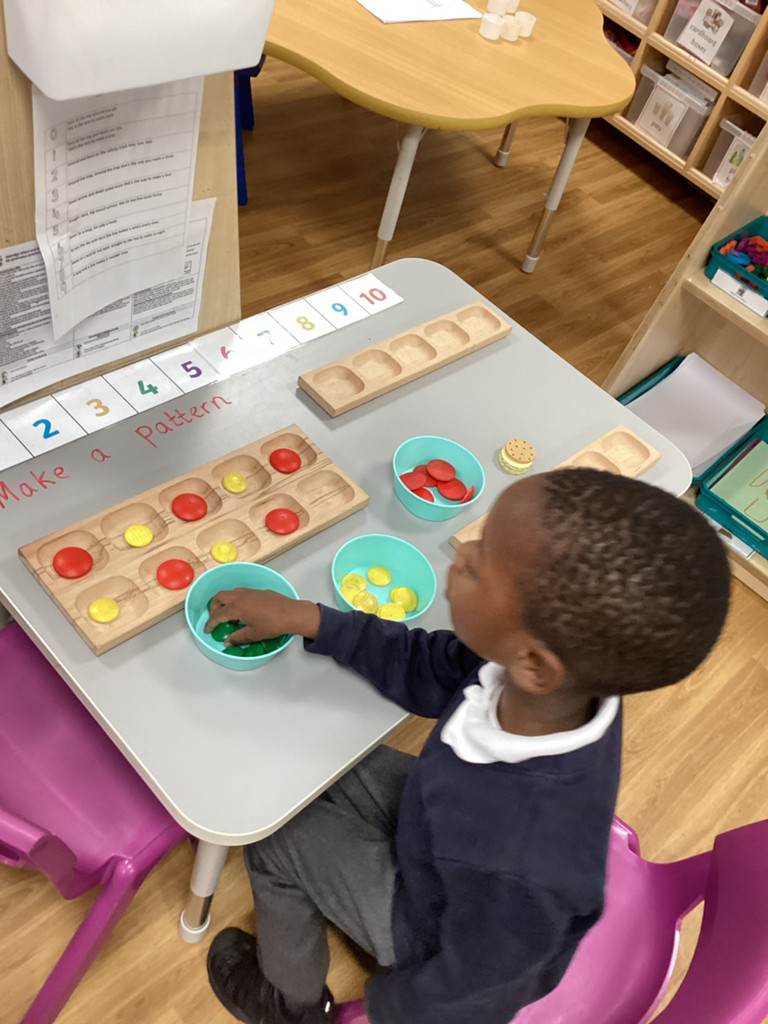
Our Maths focus was on exploring simple patterns, continuing them, and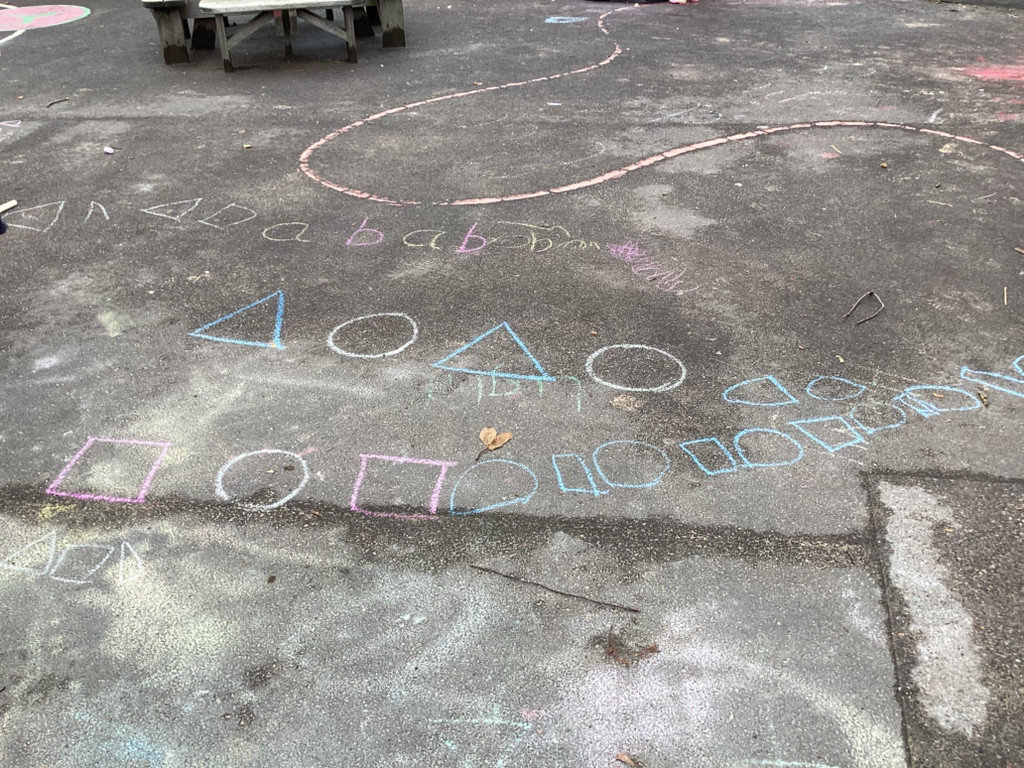 observing patterns in the world around us. The children made patterns using concrete materials, pictures and completed some worksheets.
In the creative area, we made monsters using junk modelling. The children also painted different jars half full, full and empty. In the tuff tray, we made play-dough monsters, bringing them to life by giving them names and role-playing with them.
Update - Friday 10th October 2025
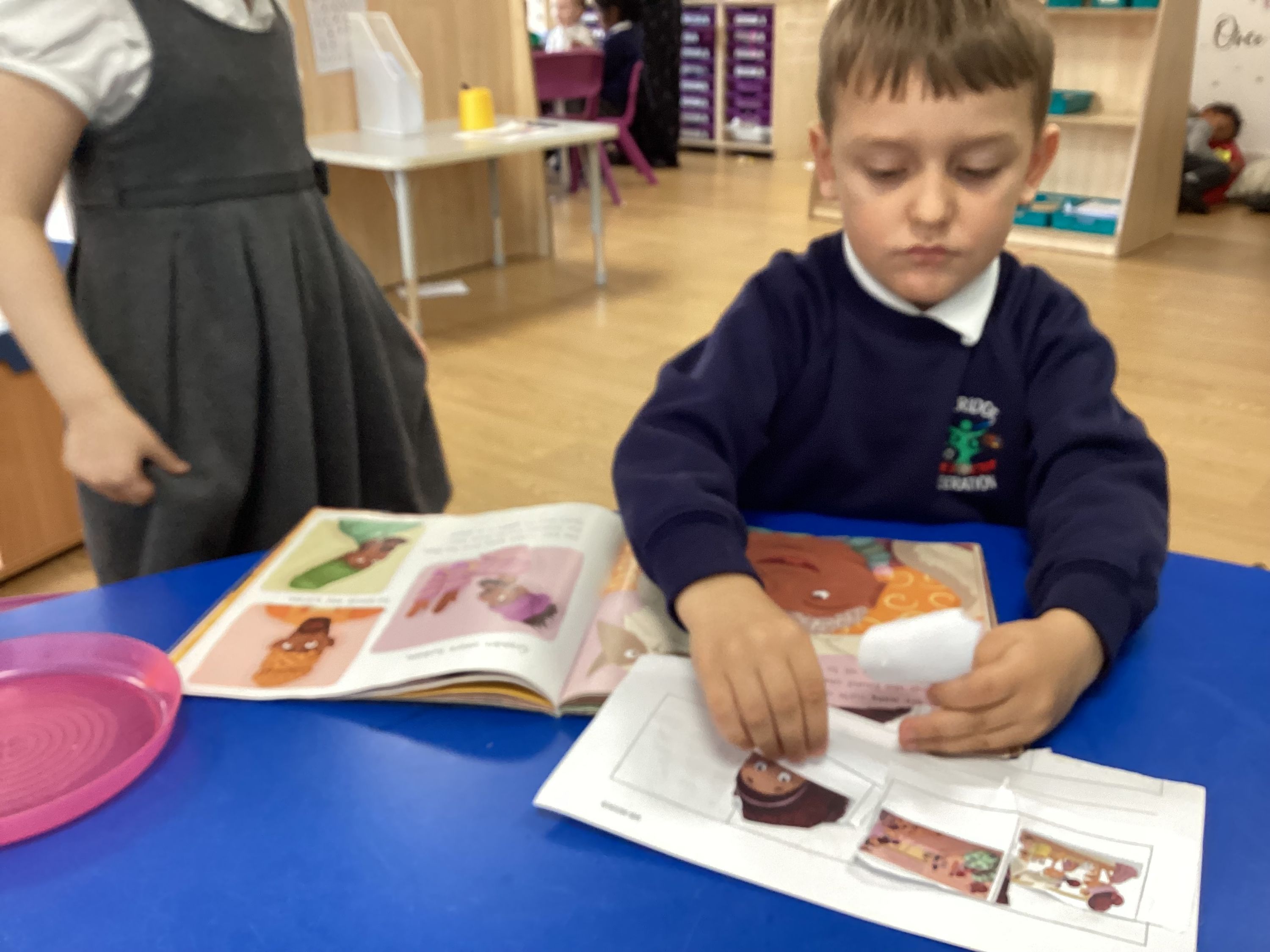
This week, we have started to celebrate Black History Month. We started by reading the book ‘My Hair’ by Hannah Lee.
We used the book to help us with our reading and writing lessons. Some children were able to write CVC words, e.g cat, dad, dog and pan. Others were able to hear and write some of the phonemes in these words. We practised our oral blending and used colour semantics to help us speak in fully formed sentences. Colourful semantics is a colour coded system that helps children construct sentences by visually breaking them down into their component parts, such as ‘who’, ‘what doing’, ‘what’ and ‘’where’.
We practised writing some of the graphemes we have learnt on the art table and writing table. Also, to help us with writing, we have been doing ‘Write dance’, which is a music and movement programme that uses large-scale body movements, which helps build a strong foundation for writing.
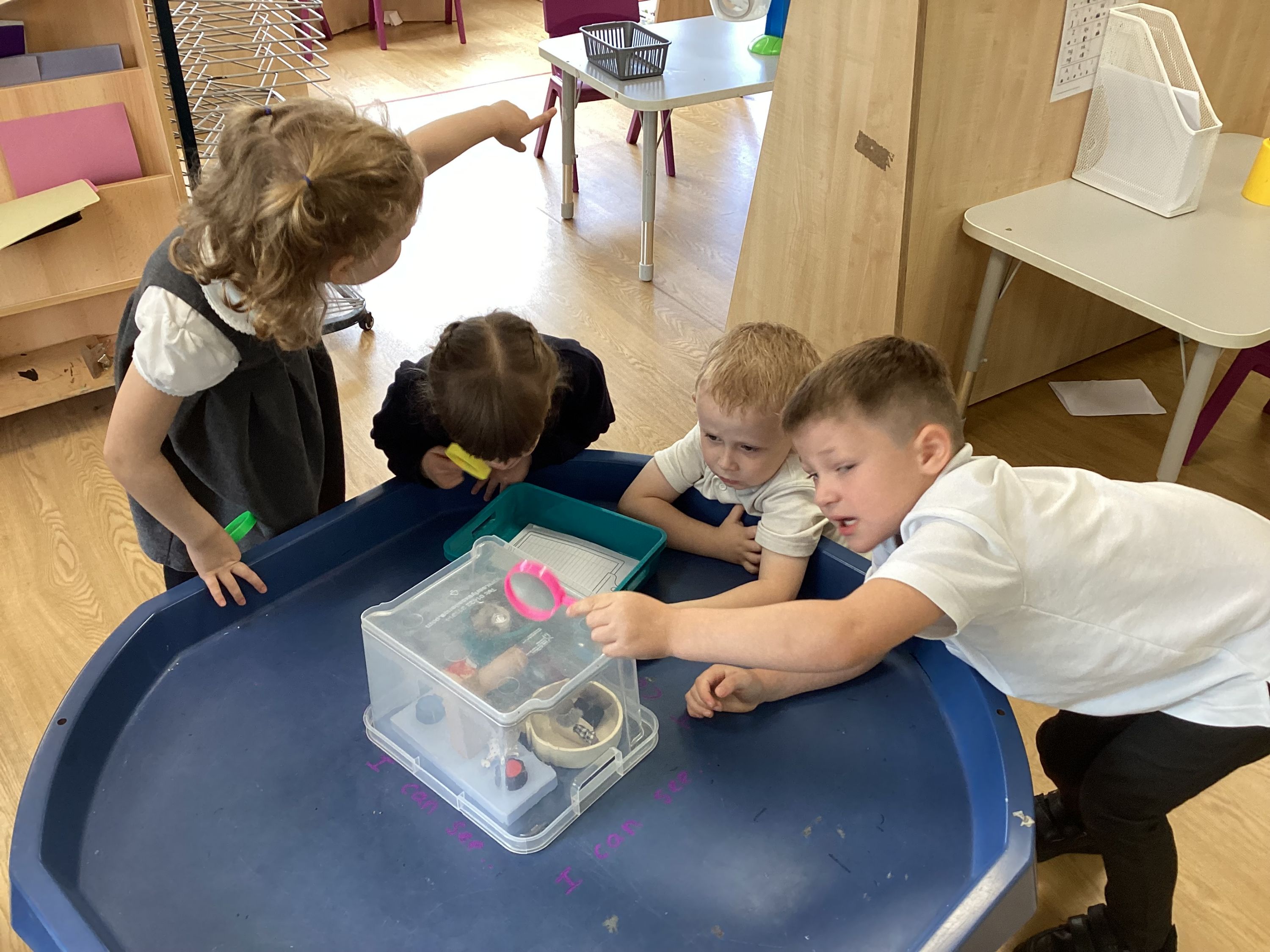
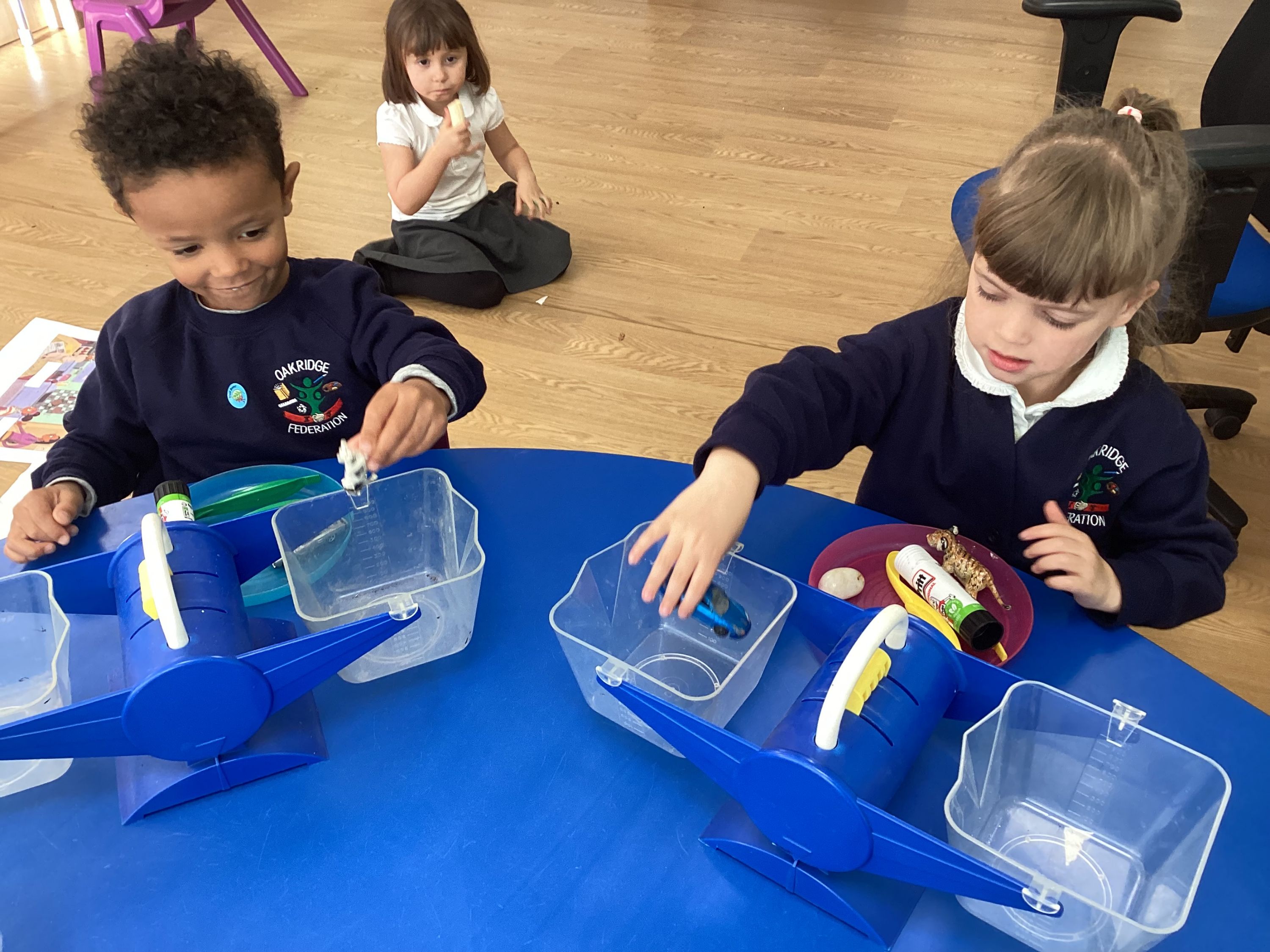
In maths, we have been focusing on capacity, mass and pattern. We worked with a partner weighing objects and identifying which was the heaviest and which was the lightest.
We continue to practise writing our names, please encourage your child write lower case letters after their initial capital letter if they are writing their name at home.
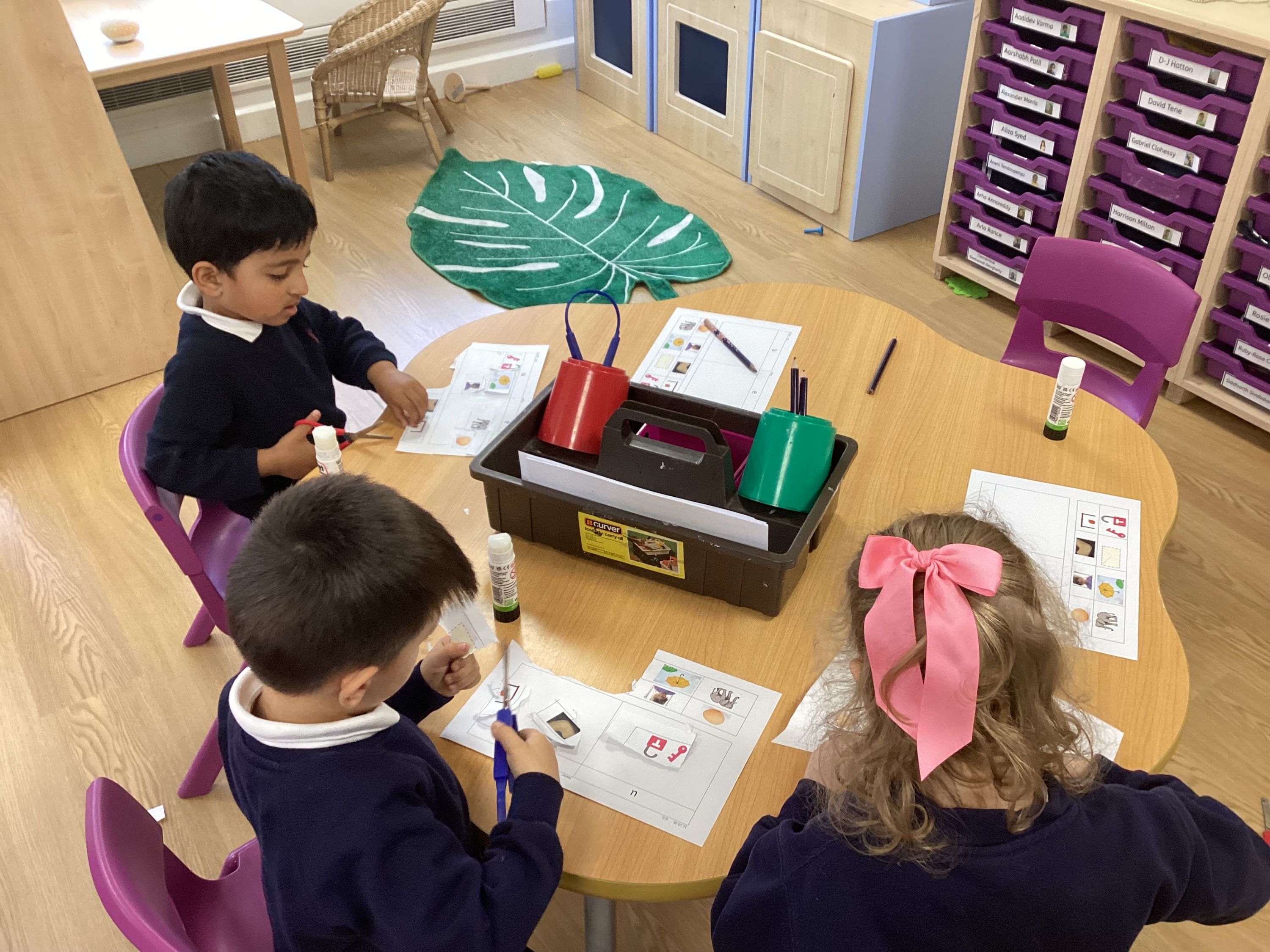
Update - Friday 3rd October 2025
This week, we have been celebrating our similarities and differences. We read the book 'We are all different', where we looked at ways we can be different, e.g favourite foods, colours, things we like to do. We learnt that it is ok to be different, and just because our friends like something doesn't mean that we have to.
We have also explored different celebrations. We have discussed the celebrations that we take part in and what this looks like.
In phonics we have learnt new phonemes for the letters d, g, o, c and k, we have also learnt the tricky word 'is'. We learnt that it is tricky because the 's' wants us to make a 'z' sound. We continue to use what we have learnt in phonics to inform classroom activities on the writing table, cutting table and the tuff tray.
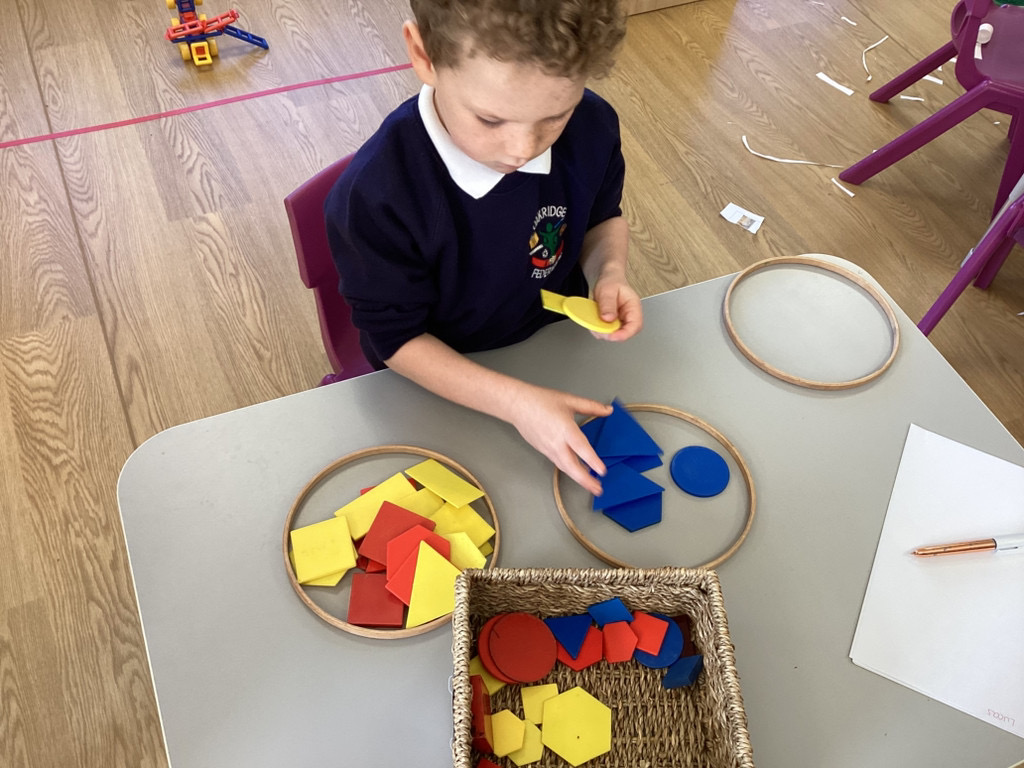
In maths, we have been practising sorting in different ways and explaining our sorting rules to others. We have also been identifying sorting rules in daily maths sessions. We have been making sure we speak in full sentences when responding, e.g. these are the same because they are all green, I have sorted by colour.
Please remember to send your child in with their reading diary and library book on Monday.
Update - Thursday 25th September 2025
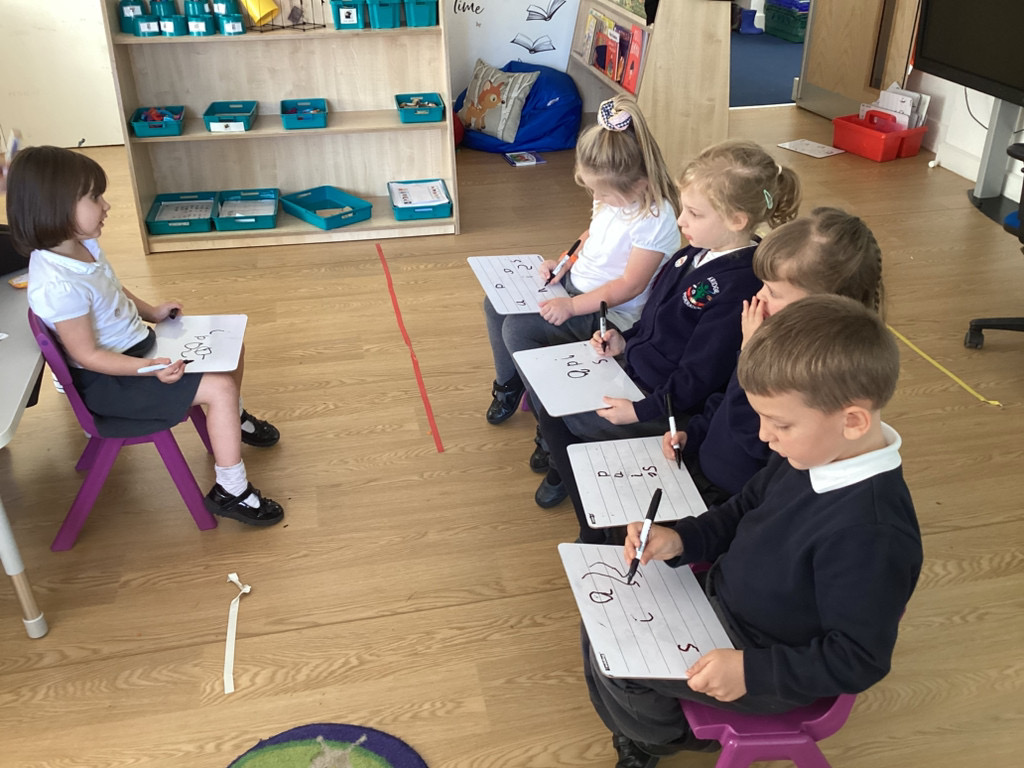
This week in phonics, we looked at the new phonemes i, n, m and d. We also revisited s , a, t and p. The children then had a go at orally blending words such as: sat, pin and tip. We also had a go at reading words such as tap, sat and sit. The children segmented and then blended these words.
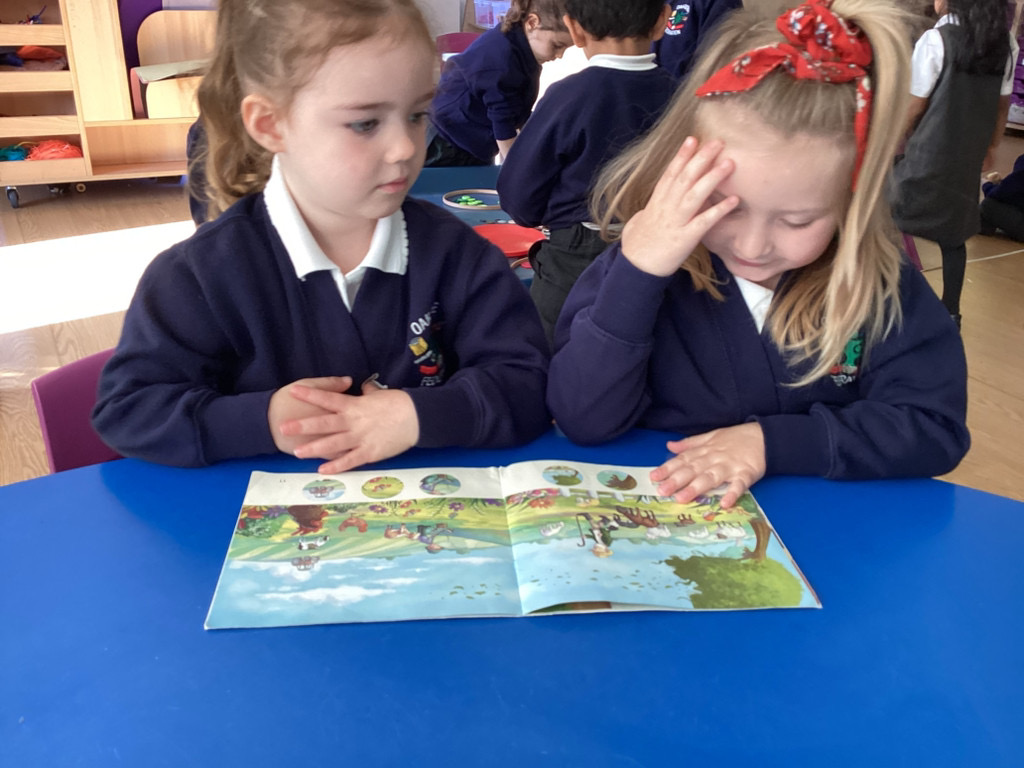
Our Topic Time focus was around the book Have You Filled a Bucket Today? We talked about how we can be bucket fillers (being nice) and what it means to be a bucket dipper (being unkind). The children had a go at sorting pictures into the right place, whether it was showing someone being a bucket filler or a dipper.
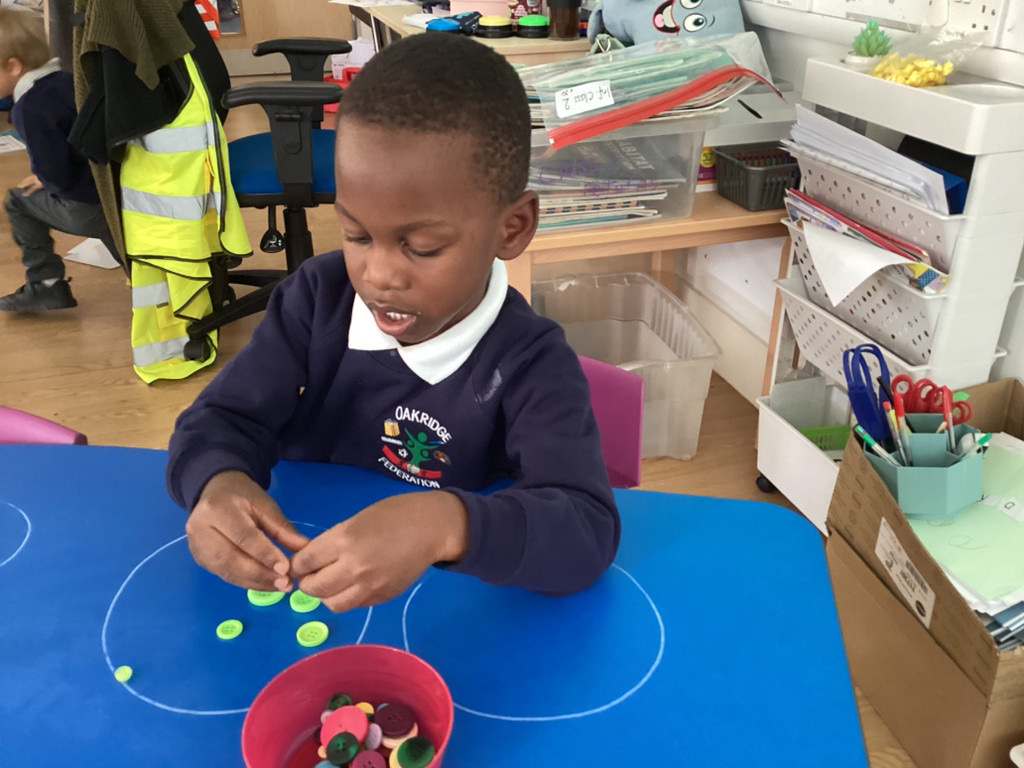
In maths, we had a look at matching and creating sets of different objects. The children explored through our enhanced provision around this theme.
In the creative area, the children created their own buckets out of toilet roll tubes, mixed blue and yellow to make green buckets and cut out stars to fill their buckets.
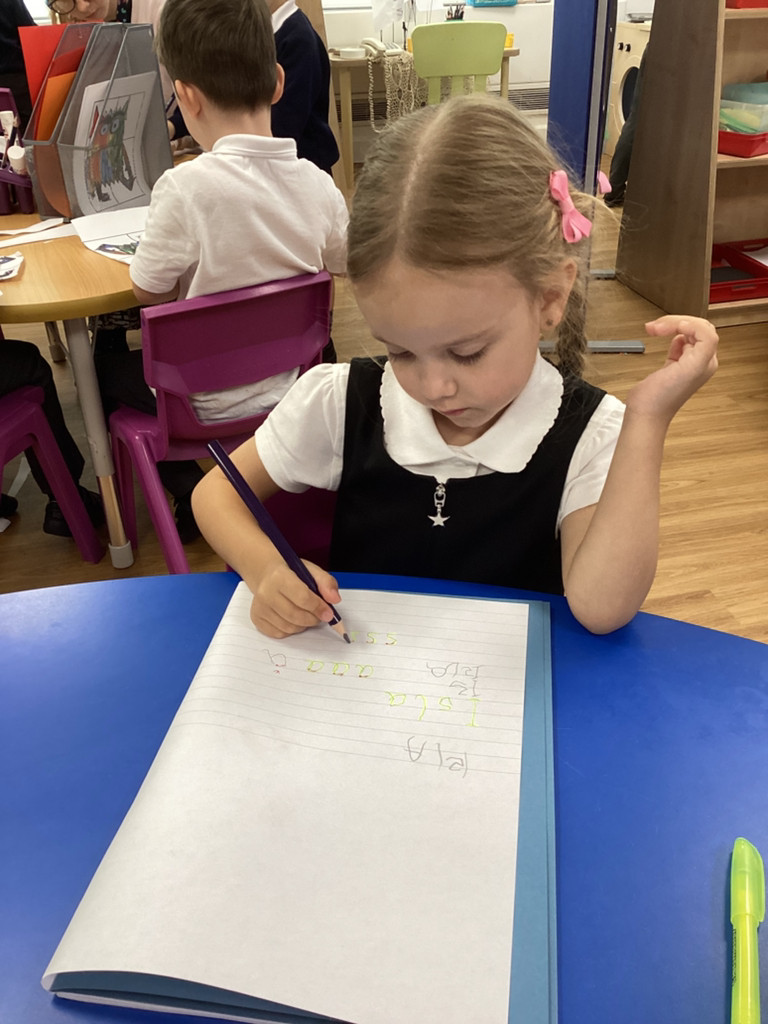
The children did some more name writing, making sure they were forming their letters correctly, whether this was by copying their name, going over highlighted letters or by memory.
Update - Friday 19th September 2025
This week in phonics, we looked at the phonemes s, t, a and p. We also practised being able to orally blend words like sit and pat.
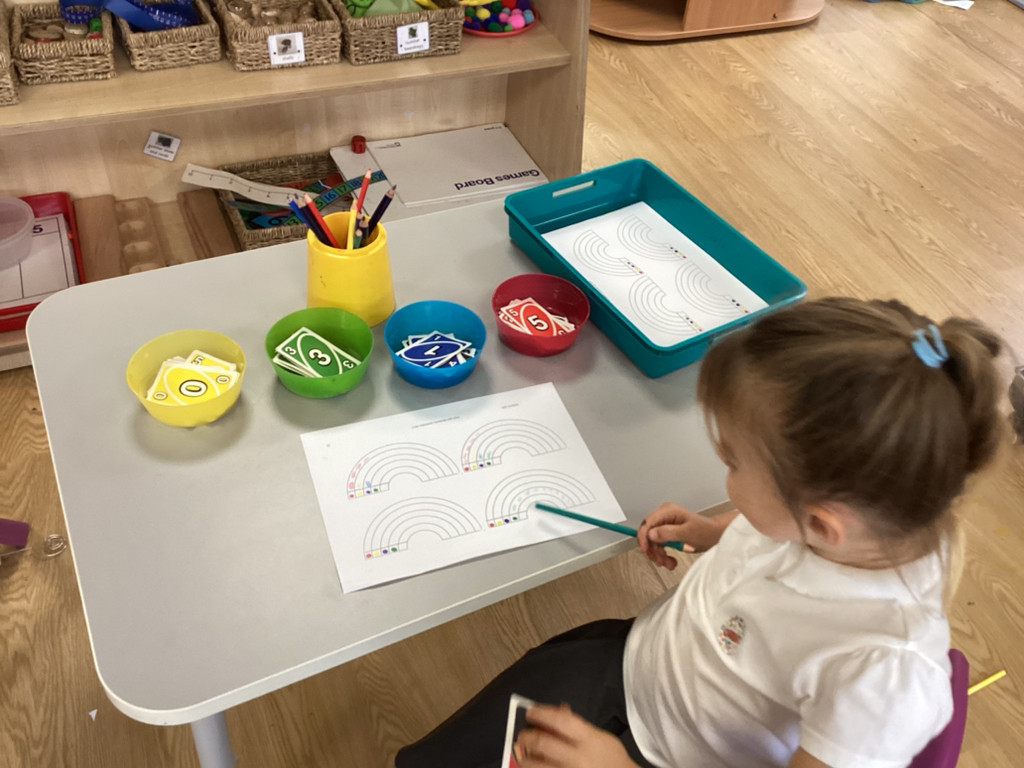
In maths, we began counting objects, matching numerals to pictorial representations and singing various number songs.
The children had a go at writing their names and practising their letter formation.
Our Topic Time focus was the book Colour Monster. We looked at the different emotions that we may experience. We spoke about how we can share our emotions by using our feelings display or talking to a friend or adult. We completed various activities, including sorting, matching, cutting and sticking, around the theme of the colour monster.
In our creative area, the children have been creating a collage of the different colour monsters, making colour monster headbands and creating their own drawings around this theme.
Year R also had their first PE session this week. We were pleased to see so many children being independent in getting changed into their kits. Just as a reminder, please could we encourage children to learn to change themselves, so the transition in the morning can run as smoothly as possible. PE kits need to be left in school as the children have it every Wednesday. The children can keep this on their peg along with their outdoor learning kits.
Well done for an amazing week. Feel free to share what you get up to at the weekend. We love to see it!
Update – Friday 12th September 2025
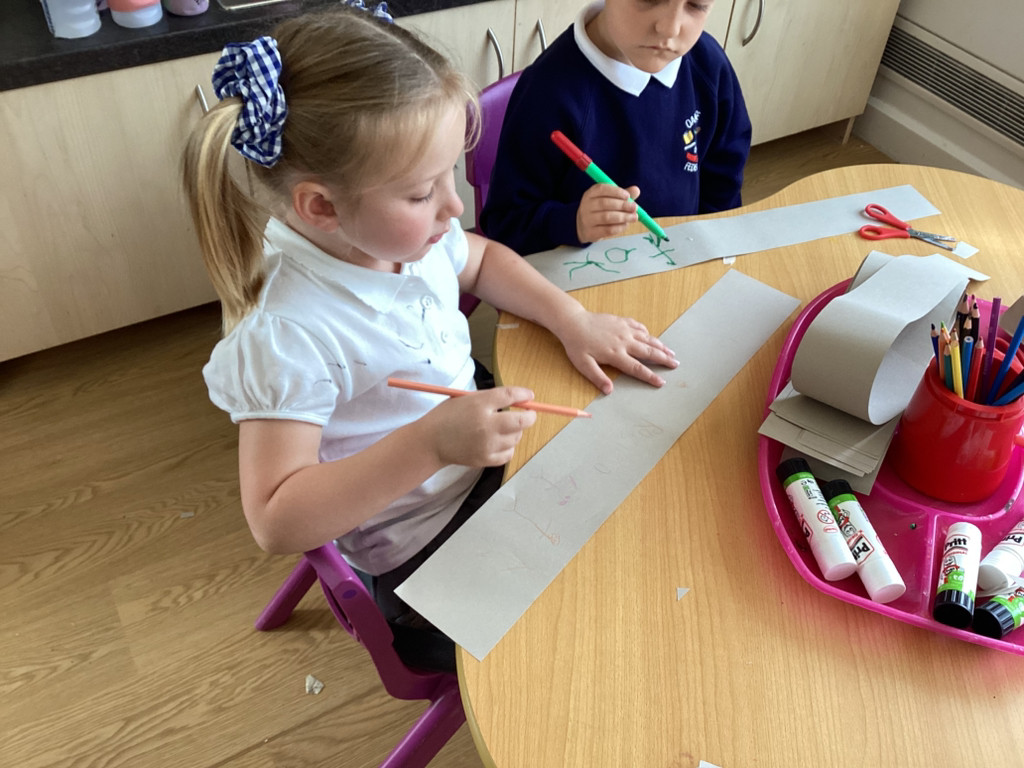
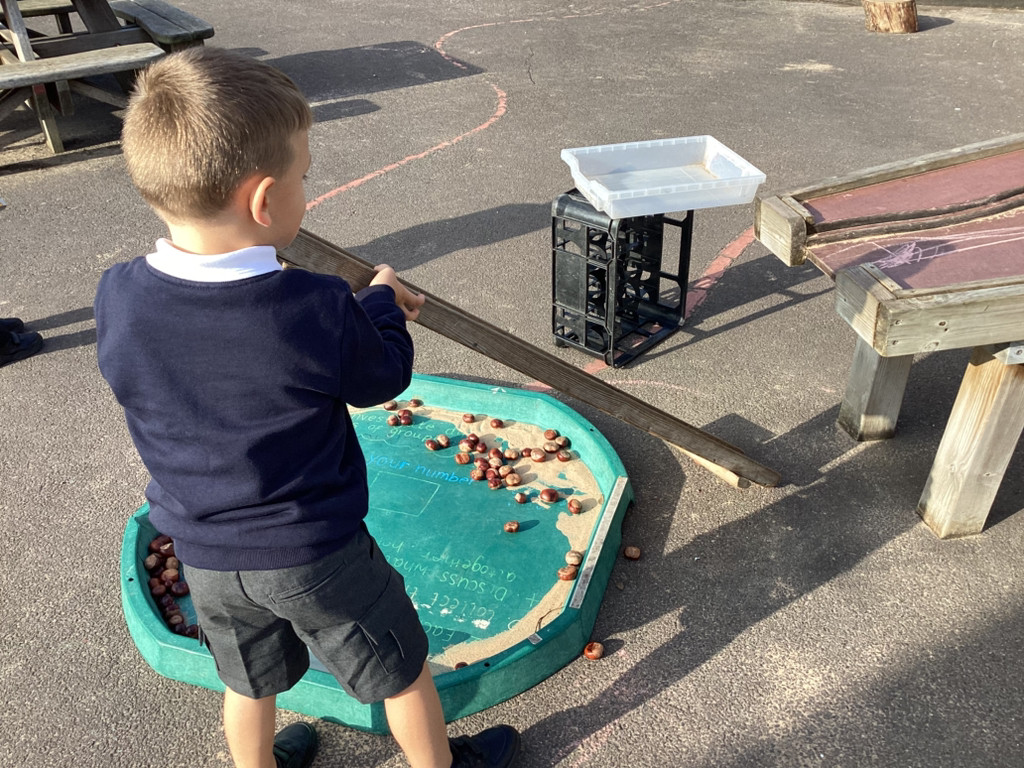
Our first week has been a combination of fun and learning new rules and routines.
We have learnt and have been following the ‘Rainbow Rules’, which are important rules that are followed throughout the infant and junior school. I wonder if your child can remember any of them.
We have been learning about each other, and the children have been making new friendships. We used plastic knives and forks, and play-dough to practise our cutting skills to help us at lunchtime.
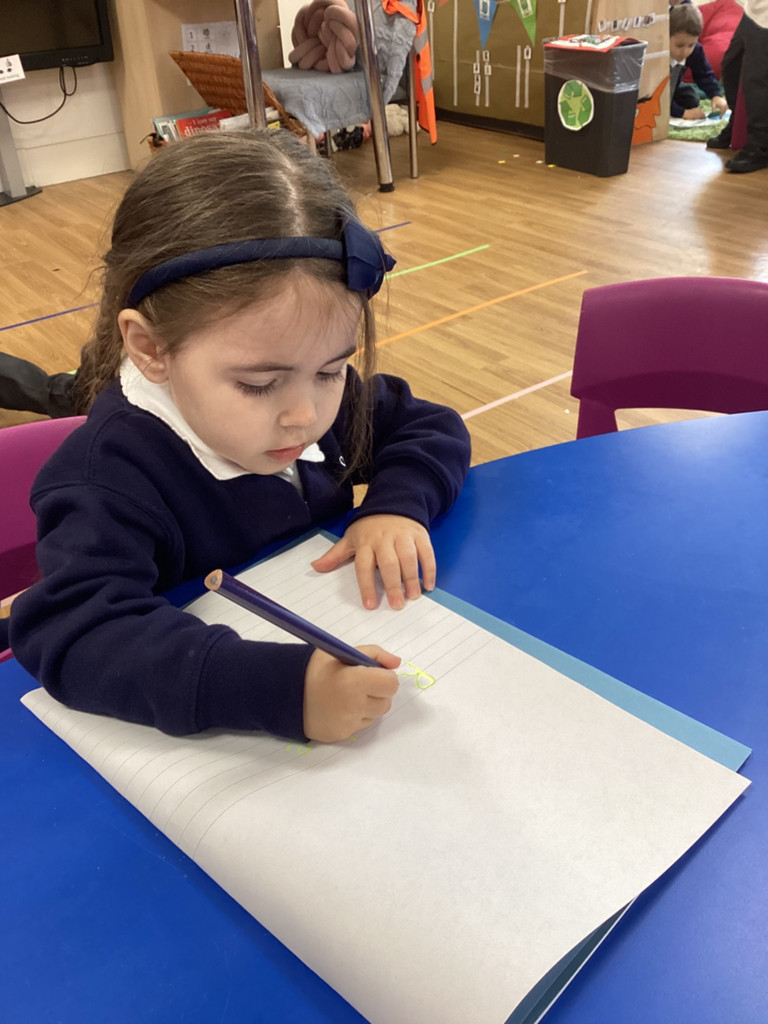
We have shared lots of stories, and the children have demonstrated good sitting and good listening. The children have been practising writing their names and their scissor skills. If you are going to help your child write their name at home, please remember to write only the first letter as a capital and the rest in lowercase.
We have been playing games together, practising sharing and our social skills. We introduced the feelings display, and everyone had a chance to tell and show us how they were feeling and why.
Have a lovely weekend. Please don’t forget to send in reading diaries on Monday.
Thank you for your patience this week.