Year 5
Welcome to Year 5!
2026-27
In Year 5, our teachers are Mrs Tamsett-Tate (Class 7), Miss Brown (Class 8) and Miss Scott and Mrs Oswald (Class 9).
If you have any questions, please get in touch with your child's teacher. If they are not around at pick-up, you can speak to them by phoning the school office and requesting an appointment.
Keep referring back to this page for regular updates about the children's learning.
Curriculum Newsletters
Year 5 Autumn 1 Curriculum Newsletter
Update - Friday 18th September 2026
This week in English, Year 5 have been developing some of the key writing skills they identified and used in their Apprentice Pieces, before moving on to create their final piece of writing.
We began by exploring the impact of emotive language. The children watched a range of clips, explored different texts and listened to speeches, thinking carefully about how particular words and phrases can make an audience feel a certain way. They then had a go at creating their own emotive sentences, using powerful vocabulary to create a strong response from the reader.
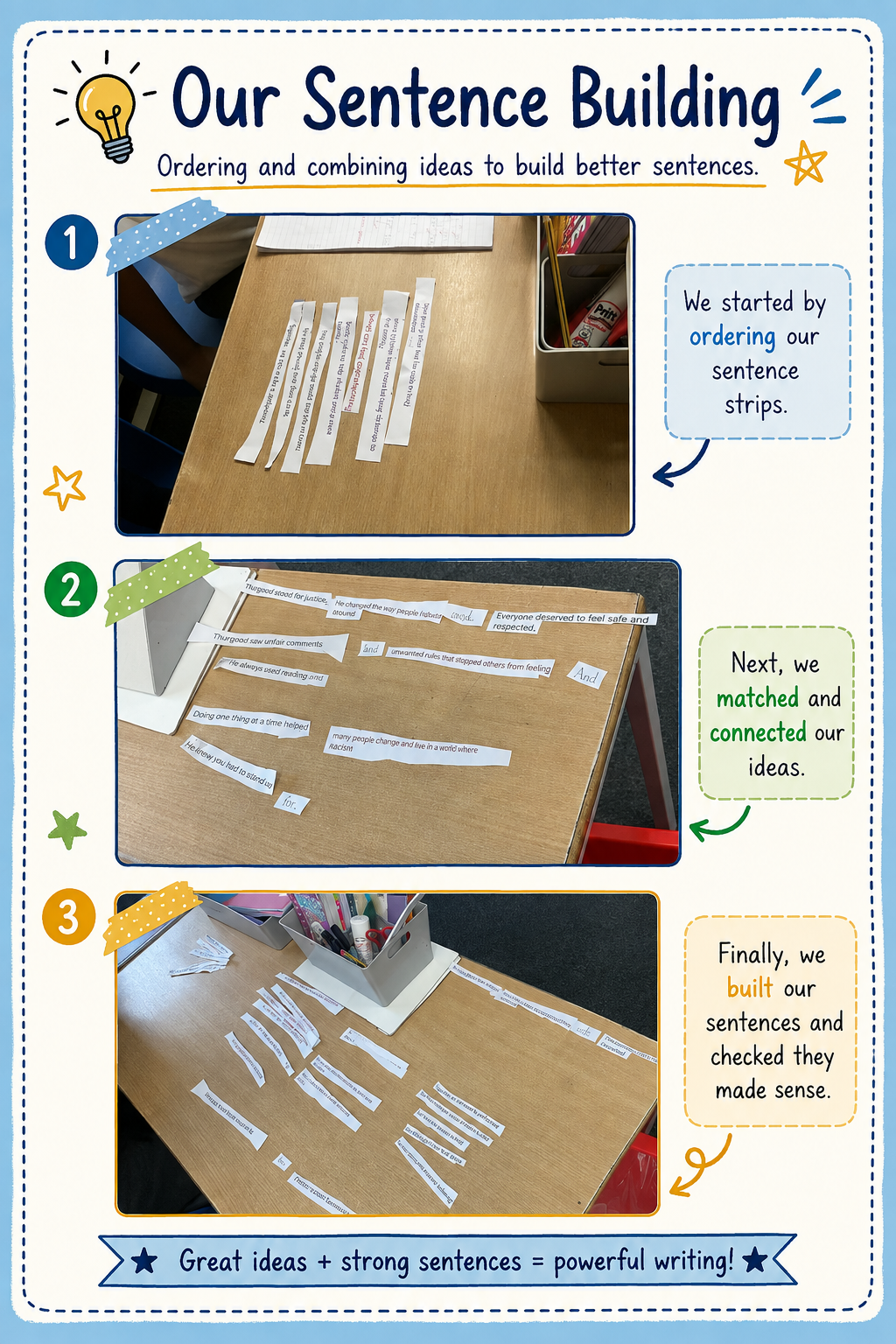
Next, we looked at how writers can manipulate sentences to make their writing as effective as possible. The children were given a range of sentence ingredients, including fronted adverbials, rhetorical questions, persuasive points and relative clauses. Their challenge was to piece these together to create fluent, complex sentences that clearly explained a point, expanded on an idea and gradually built up their writing.
The children really enjoyed our sentence-building challenge, experimenting with different ways of combining the ingredients and discussing which versions were most effective.
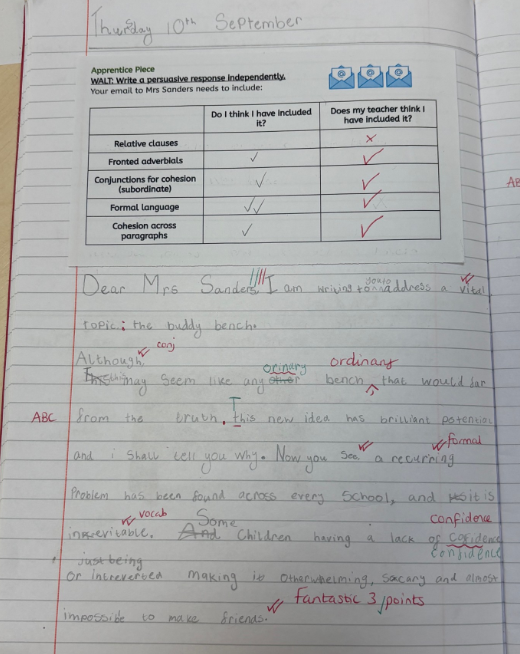
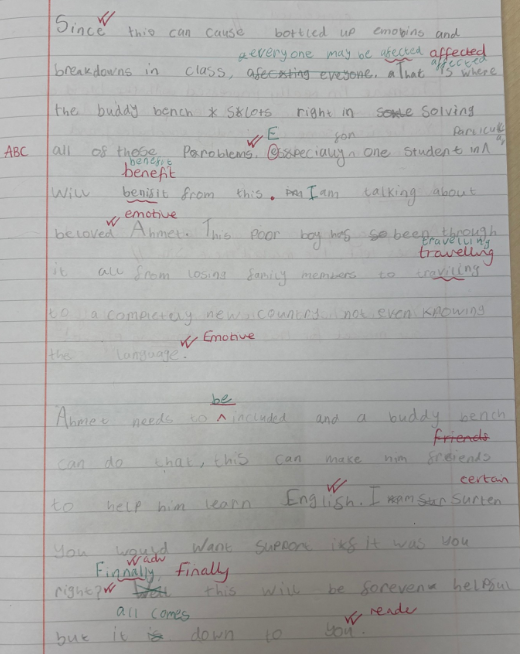
Below is an example of a fantastic Apprentice Piece, alongside some photographs from our sentence-building activity. We are looking forward to seeing how the children use these skills when they produce their final pieces!

In Geography this week, Year 5 have been developing their map-reading skills and building on their understanding of Ordnance Survey maps and four-figure grid references.
We introduced contour lines and explored how these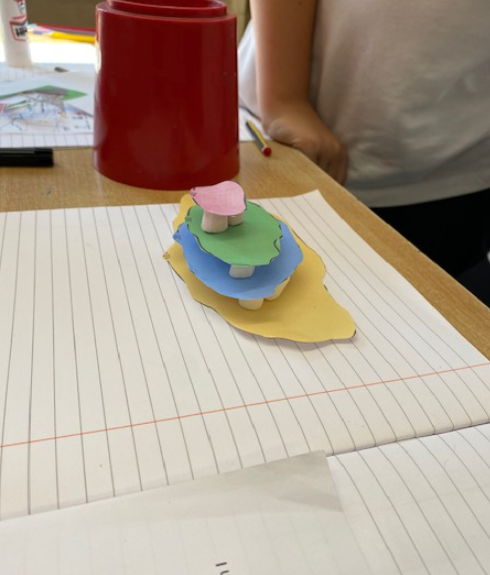 lines provide a two-dimensional representation of the height and shape of the land. The children investigated how contour lines can help us identify steep and gradual slopes, hills and mountain peaks when reading a map.
To really bring this idea to life, the children took part in a hands-on contour line challenge using marshmallows and templates! They used the marshmallows to recreate different landscapes and experimented with different gradients, helping them to understand why contour lines appear closer together on steep slopes and further apart on more gradual slopes.
The children then applied their new knowledge to Ordnance Survey maps, locating different features and using four-figure grid references to identify their positions.
It was fantastic to see the children getting hands-on with their learning and beginning to understand how a flat map can represent a three-dimensional landscape!
In Computing this week, Year 5 have been learning how to stay safe when using computers and technology. We followed the Kapow Year 5 Online Safety unit, which encourages children to become responsible, sensible and respectful digital users.
The children explored some of the ways we can protect ourselves and our personal information online. We discussed the importance of strong passwords, keeping personal information private and thinking carefully about what information we share with websites and apps. We also looked at app permissions and considered why an app might ask to access information such as photographs, contacts or our location.
The children also discussed what to do if something online makes them feel worried, uncomfortable or unsafe, including the importance of speaking to a trusted adult. We talked about making sensible choices and using good judgement when communicating and sharing information online.
It was great to see the children confidently sharing their ideas and beginning to think more critically about how they use technology. Our key message was simple: be safe, be smart and think before you click!
Update – Friday 11th September 2026
Maths – Place Value
We have been continuing our Maths learning by following the Place Value unit from White Rose Maths. The children have been developing their understanding of increasingly large numbers and, importantly, thinking carefully about the value of each individual digit within a number.
One of the areas we have explored is finding 10, 100, 1,000 and 10,000 more or less than a given number. This has encouraged the children to really consider what happens to each digit when we increase or decrease a number, rather than simply relying on written calculations. We have used a range of practical and visual representations to help us understand how numbers change when we move between different place-value columns.
We are now moving on to partitioning numbers according to place value. The children will be developing their ability to break larger numbers apart into thousands, hundreds, tens and ones, as well as exploring different ways that numbers can be partitioned. This is an important skill which will support lots of our future Maths learning.
Coming up, we will also be exploring rounding numbers to different degrees of accuracy. The children will learn how to round numbers to the nearest 10, 100, 1,000 and beyond, explaining how they know which way a number should be rounded.
We have been encouraging the children to explain their mathematical thinking and use accurate mathematical vocabulary. As always, the emphasis is not just on getting an answer, but on understanding why an answer is correct.
English – Persuasive Writing
We have been working on our persuasive writing skills through our class text, The Boy at the Back of the Class. The children have recently completed their own apprentice writing pieces, putting themselves into the world of the story and considering how the experiences of the characters might be improved.
Our writing task was to imagine that we were writing an email to Mrs Sanders, the Headteacher, persuading her to introduce a buddy bench in the school playground. The children had to think carefully about why a buddy bench could make a positive difference to pupils in their school.
To make their arguments convincing, we explored a range of persuasive devices. The children particularly enjoyed experimenting with rhetorical questions, thinking about how asking the reader a question can make them stop and consider an issue. They also used reasons, examples and emotive language to strengthen their arguments.
We made links to Ahmet, one of the central characters in the book, and considered how a buddy bench could have helped a child who might feel lonely, new or unsure about how to make friends. This gave the children a meaningful reason for their writing rather than simply persuading for the sake of completing a task.
The children have worked hard to make their writing sound convincing and appropriate for its intended audience. We have also continued to focus on sentence construction, vocabulary choices and making sure that our writing has a clear purpose.
It has been lovely to see the children developing confidence in expressing their own ideas and using writing to persuade others.
History – Dynamic Dynasties: Ancient China
In History, we have begun our new Dynamic Dynasties topic, focusing on the fascinating history of Ancient China.
Our first challenge has been to develop a clear understanding of chronology. The children have been learning about important events and periods in Ancient Chinese history and thinking carefully about where these fit on a timeline. We have discussed how historians use dates and evidence to help us put events in the correct order and why chronology is so important when studying the past.
We then took our learning off the page and into the world of drama! The children explored the story of The Yellow Emperor, using role play to help them understand some of the stories and traditions surrounding the beginnings of Ancient China.
The children were given the opportunity to act out parts of the story, take on different roles and use drama to explore historical ideas. This was a fantastic way of allowing them to engage with the past in a more memorable and active way. It also encouraged them to think about how people in the past might have behaved, communicated and understood the world around them.
Drama can be a brilliant tool for developing historical understanding because it encourages children to consider the perspectives of people from the past rather than simply remembering facts.
We will continue building our knowledge of Ancient China over the coming weeks, exploring the different dynasties, significant people, achievements and developments that have shaped this fascinating civilisation.
There is lots more to discover, and the children have already shown plenty of curiosity about what life was like thousands of years ago!

Spellings – Weekly Spelling Patterns
We have now started our new weekly spelling units. Rather than simply learning a long list of unrelated words, each week we will be focusing on a particular spelling pattern, rule or sound.
Each week, the children will be introduced to 10 focus words which follow the spelling pattern or rule we are studying. We will spend time looking carefully at these words, identifying what they have in common and exploring how the spelling pattern works.
The children will then have the opportunity to practise these words during the week. The 10 focus words will also be sent home so that children who would like to practise further and challenge themselves can work on them at home. There is absolutely no expectation that children need to spend a huge amount of time completing additional spelling work at home — the words are there as an opportunity for those who would like to consolidate their learning or push themselves further.
Rather than simply testing whether children can memorise a list of words, we want them to develop an understanding of why words are spelt in a particular way. Recognising patterns and applying spelling rules to unfamiliar words will help children become increasingly independent spellers.
On Fridays, we will revisit our focus words and look at the progress the children have made throughout the week. This gives us an opportunity to celebrate successes, identify words that may still need a little more practice and see how confidently the children can apply the pattern they have learnt.
We are looking forward to building up the children's spelling knowledge and helping them become more confident and independent with their written work.
Update – Friday 4th September 2026
We hope you have all had a lovely summer break and enjoyed spending time together over the holidays.
Welcome to Year 5! We have many exciting plans for the children this year, so stay tuned to this Year 5 group page on the website for weekly updates.
Our first week
We have already been so impressed with the way the children have come back to school and started to settle into their new classes. Although they are in the same classroom area as last year, they have stepped up their game and are adjusting well to the expectations set for Year 5. Every child has shown such a positive attitude towards their learning and their new class teachers, so we are already excited about the year ahead.
We began full steam ahead and the children have already kicked off many of their topics for the half-term. Here are a few we have already started:
Maths
This half-term we are focusing on place value. The children use a combination of White Rose maths alongside the teacher's own creative ideas and have already explored Roman numerals as well as the place value columns. This exploration will continue into next week.
English
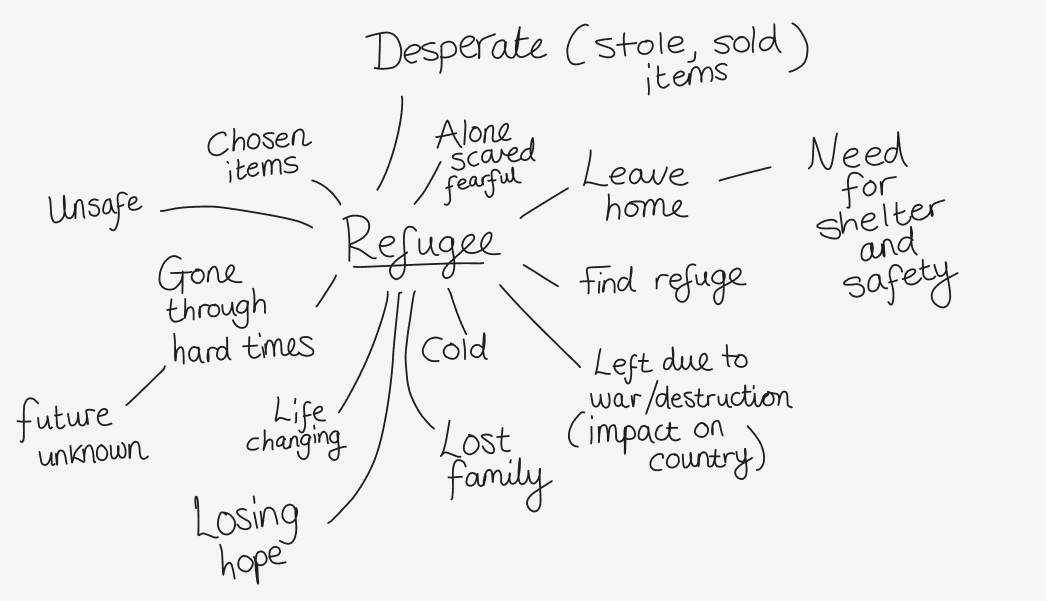
The children have started to read their new class book 'The Boy At The Back Of The Class', and we will be completing a writing unit alongside this. On our first day, we explored the term 'refugee'. A lonely chair sat at the front of the classroom when we first came back to school and on the chair, there sat a rucksack. Inside this rucksack, we uncovered a range of clues that helped us understand more about refugees.